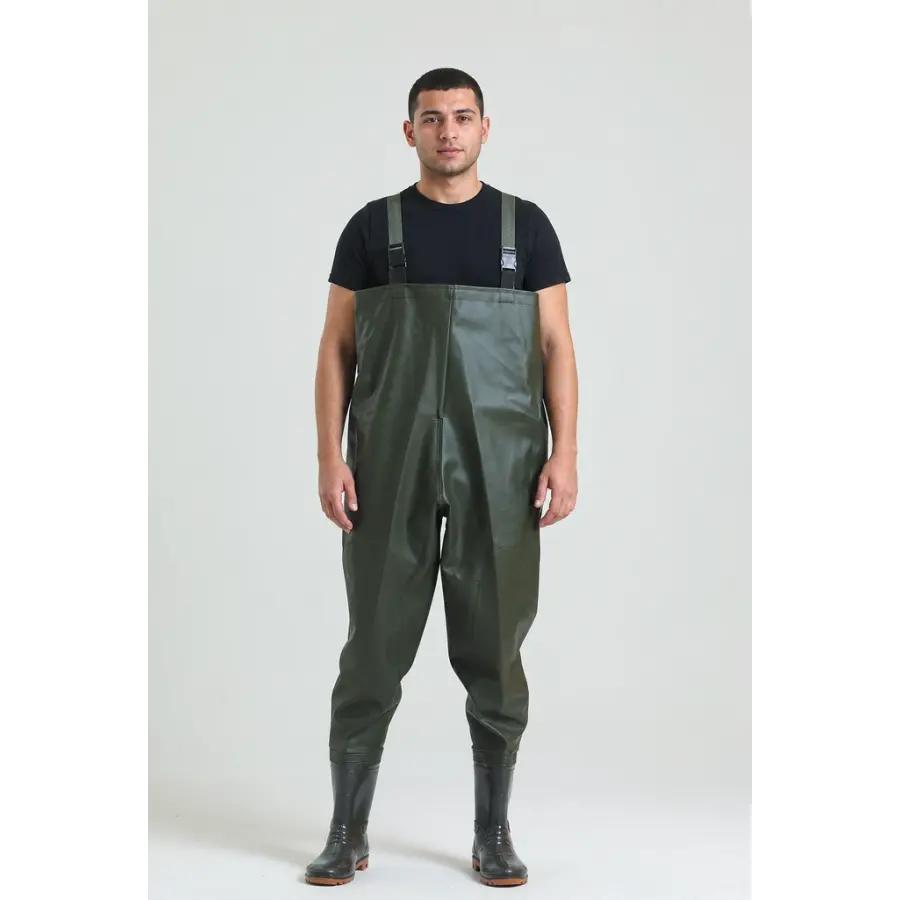




Bib waders are work products in which the boots and the section covering the upper body form a single construction. They can be a good choice for wet, muddy or demanding site conditions, but material, size, brace design, sole and working environment should all be considered together.
Standard boots mainly cover the foot and leg, whereas bib waders can also cover a larger part of the body. Depending on the application, this design can provide a more extensive physical barrier; however, technical protective properties should be checked for each individual product.
Bib waders made from PVC, rubber or other materials do not all offer the same resistance properties. If contact with water, mud, oil or other substances is expected, follow the conditions of use specified by the manufacturer for the product.
On wet or uneven surfaces, sole design can be important. If you need technical properties such as slip resistance, puncture protection or antistatic performance, verify them not just by appearance but from the product description and any stated standard.
With bib waders, shoe size alone is not enough. Body width, leg length, calf circumference, brace adjustment and the thickness of the clothing worn underneath are also important when choosing a size.
Being of bib design does not automatically mean a product offers specific protection against chemical, electrical or mechanical risks. If a specific risk is present, also check the manufacturer's technical declaration and the relevant standard information.
Depending on the height required and your working environment, you can also consider chest waders or standard safety wellington boots.
Browse Safety Wellington Boots


We use strictly necessary cookies to run this website. With your explicit consent we also use analytics and marketing cookies; in this context some data may be transferred to service providers outside Türkiye. You can change your choice at any time. Details: Cookie Policy