Is buying PPE a legal requirement?
Yes. Under Turkish Occupational Health and Safety Law No. 6331, employers must provide employees, free of charge, with personal protective equipment (PPE) against the hazards identified in the workplace risk assessment. Employers who fail to meet this obligation may face administrative fines, and in the event of a workplace accident, civil and criminal liability may arise.
No. All personal protective equipment (PPE) sold in Türkiye must carry the CE marking. Products without CE certification do not meet the legal requirements, so they can lead to fines during inspections and may create liability for compensation in the event of a workplace accident. The 4-digit number next to the CE marking is the identification number of the independent body that assessed the product (Notified Body). If this number is missing, the product relies solely on the manufacturer's own declaration.
Yes. Under Occupational Health and Safety Law No. 6331, employers in Türkiye must provide employees, free of charge, with the work clothing and PPE identified in the risk assessment. Passing this cost on to employees through wage deductions is not lawful. Employers are also responsible for maintaining, repairing and, where necessary, replacing this equipment.
This is a common misconception. Toe caps certified to EN ISO 20345 must maintain a specified minimum internal clearance under an impact energy of 200 J. Even if the toe cap deforms, the standard guarantees enough space to prevent the toes from being crushed. Buying a certified product gives you this assurance.
Both offer equivalent protection, as under EN ISO 20345 each must pass the same impact (200 J) and compression (15 kN) tests. A composite toe cap (glass fibre or carbon fibre) does not set off metal detectors, is lighter and, in terms of thermal conductivity, outperforms steel in cold environments. For this reason, composite toe caps are preferred in the food, pharmaceutical, aviation and sensitive electronics sectors. For heavy industry, or where cost is the priority, a steel toe cap is a suitable choice.
S1, S1P and S3 are safety footwear classes defined in EN ISO 20345. All of them have a toe cap tested to 200 J impact; the toe cap may be steel, composite or aluminium. The class does not specify the toe cap material.
- S1: Toe cap, closed heel area, antistatic properties (A) and energy absorption in the heel (E).
- S1P: All S1 features plus puncture resistance in the sole (P). Preferred in areas with a risk of nails or sharp objects.
- S2: All S1 features plus water penetration and water absorption resistance of the upper (WPA).
- S3: All S2 features plus puncture resistance and a cleated (lugged) outsole. A common choice for wet floors and outdoor site work.
S3 does not mean the shoe is fully waterproof; waterproofing of the whole shoe is indicated by the WR marking (e.g. S6, S7). In the 2022 revision of the standard, puncture resistance is marked separately for metal penetration-resistant inserts (P) and non-metallic inserts (PL, PS). Always check a product's class against the information on the product label and in the declaration of conformity. For a detailed comparison, see our guide Differences between S1P and S3 safety shoes.
Cotton absorbs several times its own weight in moisture and stays wet for a very long time. In cold, windy conditions, wet cotton clothing rapidly lowers body temperature and significantly increases the risk of hypothermia. That is why the warning "cotton kills" is widely used in mountaineering and outdoor circles. Moisture-wicking polyester or merino wool should be chosen instead.
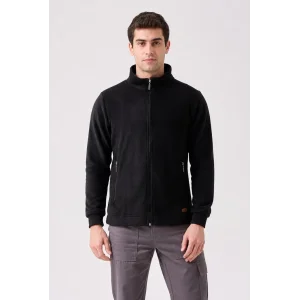
The layering system is based on wearing garments with three different functions to protect the body from moisture, cold and wind. The first layer (base layer) manages moisture and wicks sweat away from the skin. The second layer (mid layer) consists of insulating garments such as fleece or a puffer gilet. The third layer (shell layer), a softshell or hardshell jacket, acts as the outer barrier against wind and rain. The system can be adjusted to your activity level by adding or removing layers.
A softshell jacket is flexible, breathable and partially water-resistant, making it ideal for high-activity use in windy conditions without heavy rain. A hardshell jacket, by contrast, uses laminated membrane technology such as Gore-Tex to provide full water resistance, and is essential for mountaineering, storms and heavy rain. If possible, owning both is the best solution.
Tactical trousers feature specific details such as ripstop fabric (a tear-resistant grid weave), knee pad pockets, hidden pockets with YKK zips and technical stretch panels. Standard cargo trousers, by contrast, are a general design that simply adds extra pockets. Tactical models offer a higher fabric standard, tighter stitching quality and durability for long-term heavy use, which is why they are preferred by security personnel, hikers and logistics workers.
FFP2 masks offer a filtration efficiency of at least 94%, while FFP3 masks offer at least 99%. For general dust, fumes and biological hazard environments, FFP2 is sufficient in most cases. However, FFP3 is mandatory in environments involving asbestos, radioactive particles, highly toxic chemical dust or a high risk of infection. The mask required should be determined by the workplace risk assessment.
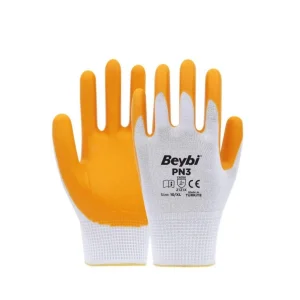
Different standards apply depending on the type of hazard. For mechanical risks (cuts, punctures, abrasion), look for compliance with EN 388; for chemical risks, EN 374; for heat and flame risks, EN 407; and for protection against cold, EN 511. A single glove can meet more than one standard, and the pictograms on the product show which standards it meets.
EN ISO 20471 defines the minimum photometric values that retroreflective tapes must still meet after a specified number of wash cycles. Yellowing, cracking or peeling of the tapes indicates that these values are no longer being met. In this case, the garment has lost its protective properties and must be replaced immediately; in environments where high visibility is required, this poses a critical occupational safety risk.
Always follow the care label on flame-retardant (FR) garments. Bleach and whitening agents permanently destroy the FR properties. Tumble drying at high temperatures also damages the fabric. As a general guide, wash on a 40°C programme with liquid detergent and dry on a low heat setting or naturally in the open air. FR garments that are damaged or deformed must be taken out of service immediately.
Waist-type belts (EN 358, work positioning belts) are designed to hold the worker in position at the work point and to prevent a fall; they must not be used for fall arrest, because in the event of a fall the load is concentrated on the waist area.
In fall arrest systems, the equipment attached to the body is the full body harness to EN 361. A full body harness distributes the fall load across the shoulders, hips and legs, and is used as part of a system together with suitable connecting components, such as a lanyard with energy absorber (EN 355) or a fall arrester, and a secure anchor point.
The system required for work at height is determined by the workplace risk assessment and the applicable regulations.
The service life of a safety helmet is set by the manufacturer and is generally stated as 5 years from the date of manufacture. However, any hard hat that has taken an impact, has been exposed to UV light for long periods, has come into contact with chemicals or shows cracks or deformation must be replaced immediately, even before this period has elapsed. For safety, the suspension (harness) system inside the helmet should also be checked at regular intervals.
For corporate bulk orders, the minimum order quantity varies by product type and brand. For details and a quotation, please get in touch via our contact form or call our customer service team directly. Logo application by embroidery or printing is also available for bulk orders.
Standard waterproof fabrics rely solely on a DWR (water-repellent) surface finish; over time this finish wears off and water resistance decreases. Gore-Tex, by contrast, uses microporous PTFE membrane technology: its pores are small enough to block water molecules yet large enough to let vapour molecules pass through, providing both full waterproofing and high breathability. With proper care, this performance is maintained for many years.
When buying safety shoes, it is recommended to choose half a size or one full size larger than your casual shoes. There are three main reasons for this: feet swell slightly during long shifts; thick thermal or antistatic socks need extra room; and there should be enough space so that the toe cap does not touch your toes. If possible, try the shoes on in the afternoon, as feet expand over the course of the day.
Shipping is free on all orders within Türkiye. Delivery times may vary depending on the product's preparation time, the delivery address and the courier's distribution schedule. For international orders, shipping costs and delivery times are confirmed in your quotation.
If your order needs to arrive by a specific date, please contact us before purchasing and include the product link or product code. This lets us confirm the current dispatch status of the item.
You can check the status of your current order on the Track order page. For any questions about tracking or delivery, simply quote your order number.