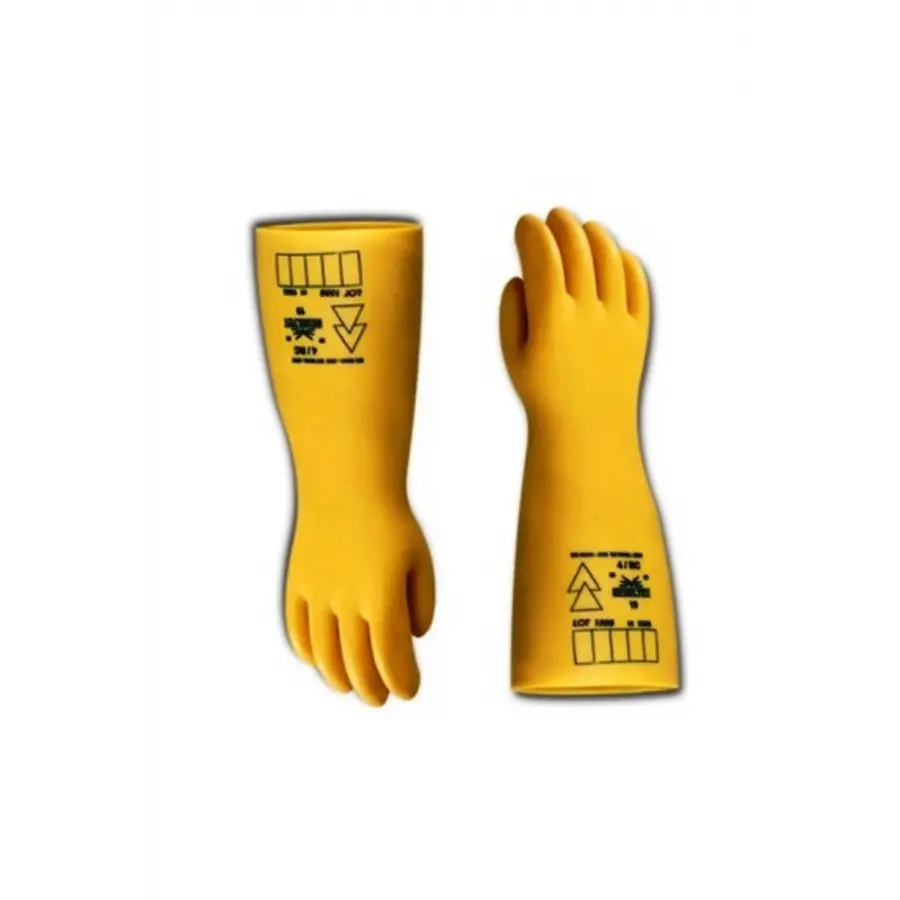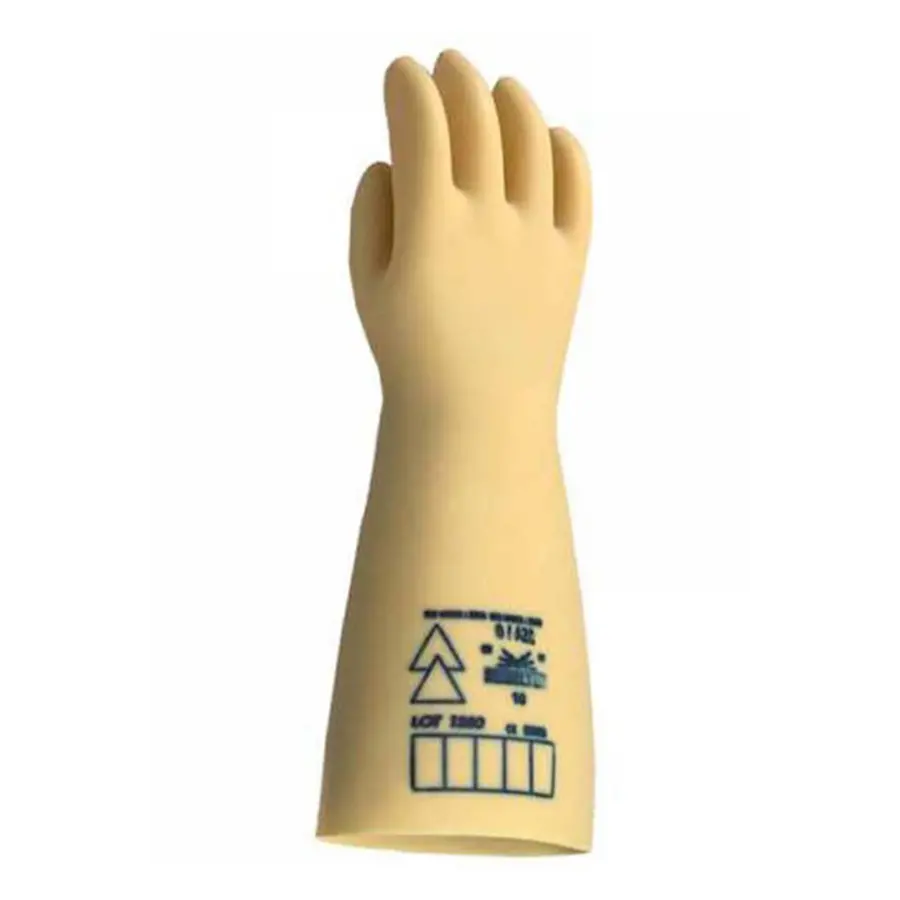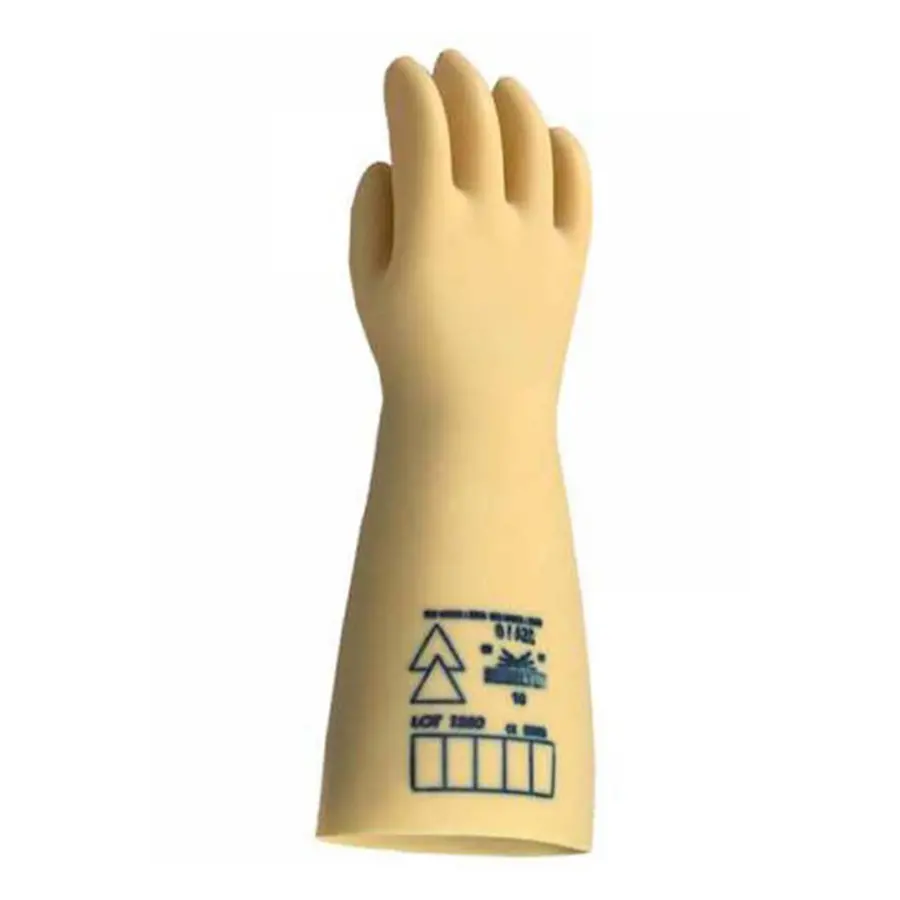





The IEC 60903 class of the gloves in this category is taken from the technical information on the product pages. The voltages in the table are the maximum use voltage defined for each class in the standard; determine suitability for your work together with your work procedure and risk assessment.
| IEC 60903 class | Maximum use voltage (AC / DC) | Products in this category |
|---|---|---|
| Class 00 | 500 V / 750 V | CATU Class 00 |
| Class 0 | 1,000 V / 1,500 V | Not currently in this category |
| Class 1 | 7,500 V / 11,250 V | CATU Class 1, Regeltex Class 1 |
| Class 2 | 17,000 V / 25,500 V | Not currently in this category |
| Class 3 | 26,500 V / 39,750 V | Not currently in this category |
| Class 4 | 36,000 V / 54,000 V | Regeltex Class 4 |
For work up to 1,000 V AC, Class 00 or Class 0 is selected; for higher voltages, choose a Class 1–4 glove that covers the line voltage. For a detailed comparison of proof test voltages and classes, see the Electrician Gloves Guide.
When choosing electrician gloves, checking only the voltage value in the product name is not enough. The glove's IEC 60903 class, maximum use voltage, proof test voltage and the manufacturer's technical documentation should all be considered together.
Electrical insulating gloves are divided into different electrical classes. Each class has a different permitted maximum use voltage. The glove's class must therefore be compatible with the nominal voltage of the system it will be used on.
The proof test or test voltage stated in the manufacturer's documentation must not be interpreted as the safe working voltage of the glove in normal use. When selecting a product, check the maximum use voltage separately.
A correct fit on the hand is important for dexterity and safe use. Before use, inspect the gloves for physical damage, punctures, cracks or surface deterioration in accordance with the manufacturer's instructions.
Standard work gloves that provide mechanical protection must not be used in place of electrical insulating gloves. For work involving electrical risk, choose products with the appropriate IEC 60903 class.
Our guide covers electrician glove classes, including Class 00, Class 1 and Class 4, as well as maximum use voltage and how it differs from proof test voltage.
Read the Electrician Gloves GuideBrowse other hand protection in the work gloves category and other personal protective equipment (PPE) in the safety equipment category.
In everyday language, "high-voltage gloves" refers to Class 1, 2, 3 and 4 gloves used for work above 1,000 V. The correct class is chosen according to the voltage of the line being worked on: Class 1 is for use up to a maximum of 7,500 V AC, and Class 4 up to a maximum of 36,000 V AC.
For work up to 1,000 V AC, Class 00 (up to 500 V AC) and Class 0 (up to 1,000 V AC) gloves are used.
No. 10,000 V is the AC test voltage of Class 1 gloves; the maximum working voltage for the same class is 7,500 V AC. Choose gloves based on the class's working voltage, not the test value.
No. Nitrile, latex or PU-coated work gloves are designed for mechanical protection and are not tested for electrical insulation. Electrical work requires electrical insulating gloves with a stated IEC 60903 class.
Under IEC 60903, the class marking is colour-coded: Class 00 beige, Class 0 red, Class 1 white, Class 2 yellow, Class 3 green, Class 4 orange. Check that the class on the label matches the class shown on the product page.
Before each use, inspect the gloves for cuts, cracks, holes, swelling or stickiness, and check them for leaks by inflating them with air as described by the manufacturer. Periodic electrical tests should be carried out in line with the manufacturer's instructions and workplace procedures; damaged gloves must not be used.


We use strictly necessary cookies to run this website. With your explicit consent we also use analytics and marketing cookies; in this context some data may be transferred to service providers outside Türkiye. You can change your choice at any time. Details: Cookie Policy