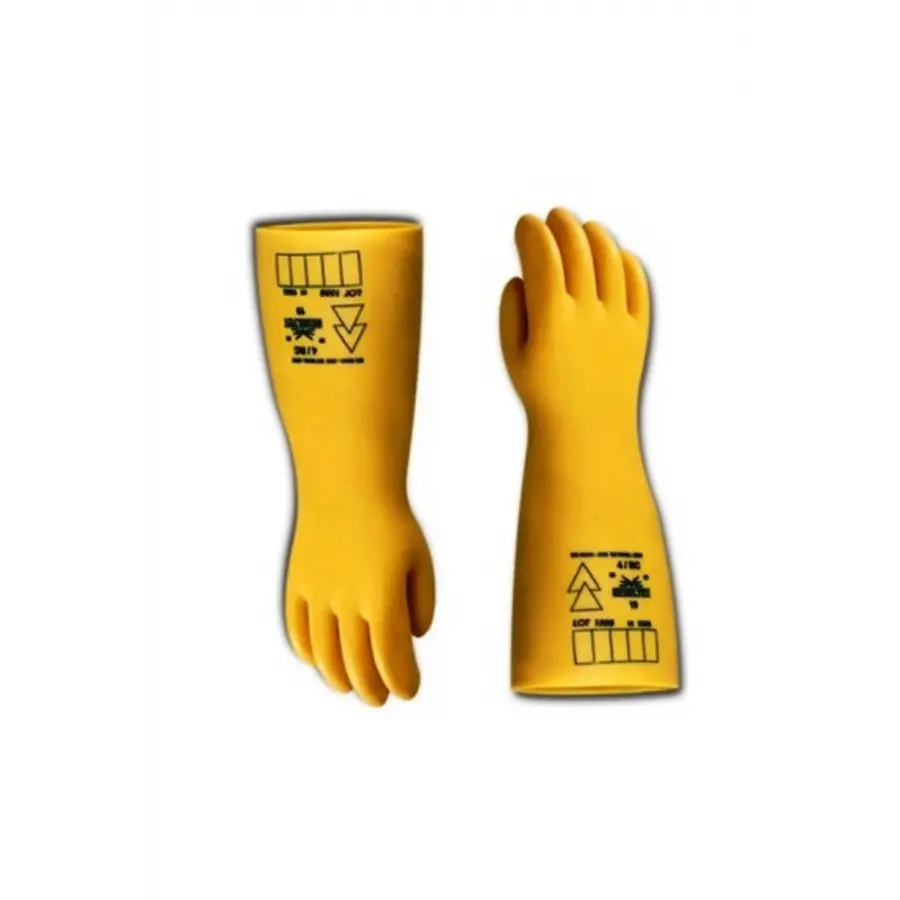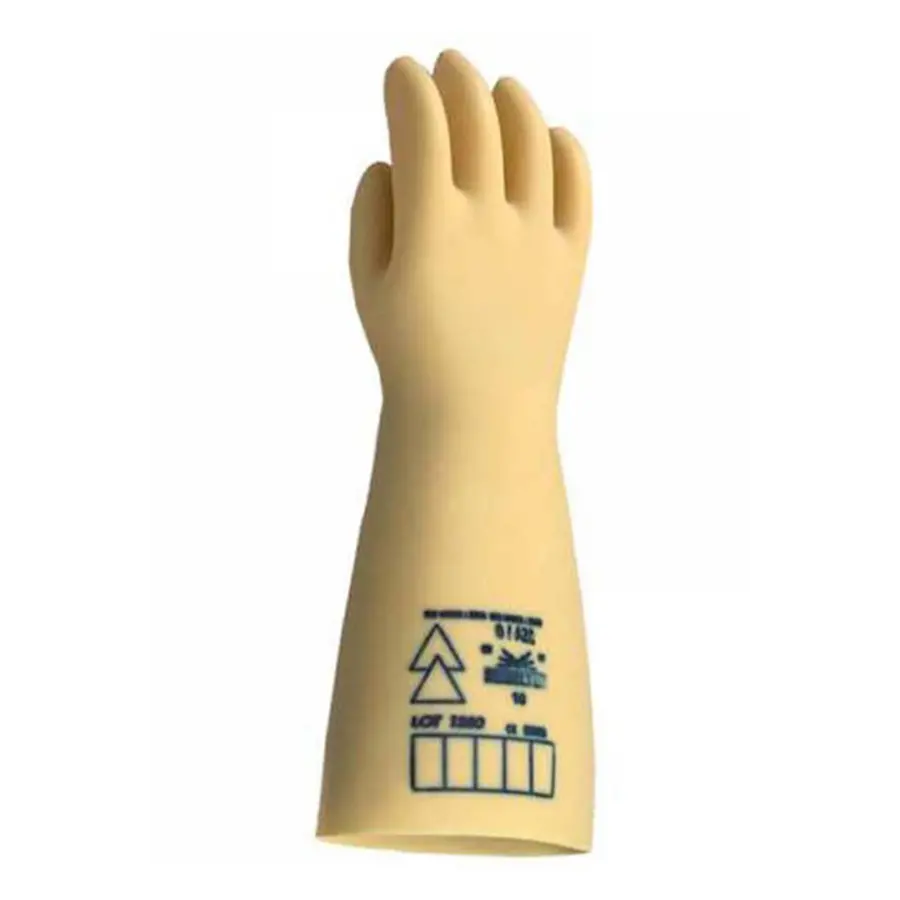





The most common mistake when choosing electrician gloves is to treat a value in the product name, such as “10 kV”, “20 kV” or “40 kV”, as the safe working voltage. With electrical insulating gloves, however, the maximum use voltage and the proof test voltage are not the same thing.
Short answer: when choosing electrical insulating gloves, look at the IEC 60903 class and that class’s maximum use voltage, not the kV value in the product name. The proof test voltage is not the limit for use.
In this guide we explain, in practical terms, the classes from Class 00 to Class 4, their maximum AC/DC use voltages and how the proof test differs. To compare products directly, go to the Electrician Gloves and Electrical Insulating Gloves category.
IEC 60903 is the core international standard for electrical insulating gloves. A glove being made of rubber or latex does not by itself make it suitable for electrical work. The appropriate class, the manufacturer’s declaration and the working voltage must all be considered together.
| Class | Max. AC use | Max. DC use | AC proof test | General level |
|---|---|---|---|---|
| Class 00 | 500 V | 750 V | 2,500 V | Low voltage |
| Class 0 | 1,000 V | 1,500 V | 5,000 V | Low voltage |
| Class 1 | 7,500 V | 11,250 V | 10,000 V | High voltage |
| Class 2 | 17,000 V | 25,500 V | 20,000 V | High voltage |
| Class 3 | 26,500 V | 39,750 V | 30,000 V | High voltage |
| Class 4 | 36,000 V | 54,000 V | 40,000 V | Highest class |
Important: This table alone does not determine whether a product is suitable. Working voltage, work procedure, manufacturer instructions, equipment condition and the risk assessment must all be considered together.
A Class 1 glove may show a 10,000 V AC proof test value. However, the maximum use voltage for the same class is 7,500 V AC. It is therefore incorrect to read “10 kV” in a product title as the working voltage.
Maximum use voltage of 500 V AC and 750 V DC. One of the classes found in low-voltage applications.
Maximum use voltage of 7,500 V AC and 11,250 V DC. The AC proof test voltage is 10,000 V.
The highest electrical class in the IEC 60903 classification. Maximum use voltage is 36,000 V AC and 54,000 V DC; the AC proof test voltage is 40,000 V.
Trade terms such as “low-voltage gloves”, “LV gloves”, “MV gloves” or “high-voltage gloves” are often used in searches. When purchasing, however, the main comparison should be based on the IEC 60903 class and maximum use voltage.
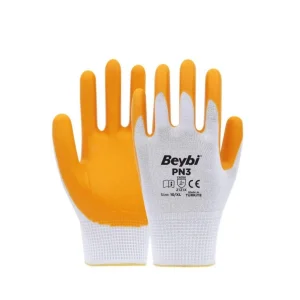
Not every product in the general work gloves category is suitable for electrical work.
With electrical insulating gloves, even a small cut, crack or surface deterioration can affect performance. Visual inspection before use and the test/inspection procedures specified by the manufacturer are therefore important.
Compare Class 00, Class 1 and Class 4 products by class, maximum use voltage and verified technical data.
View the category →Not always. A 10,000 V value shown on a product may refer to the AC proof test voltage for Class 1. The maximum use voltage for Class 1 is 7,500 V AC. Always check the product label, the class and the manufacturer's technical data sheet (TDS) together.
For Class 00, the maximum use voltage is 500 V AC and 750 V DC. The AC proof test voltage is 2,500 V.
For Class 1, the maximum use voltage is 7,500 V AC and 11,250 V DC. The AC proof test voltage is 10,000 V.
For Class 4, the maximum use voltage is 36,000 V AC and 54,000 V DC. The AC proof test voltage is 40,000 V.
IEC 60903 is the international standard for electrical insulating gloves that provide protection against electric shock.
No. Gloves used where there is an electrical risk must have the appropriate electrical class and standard. Ordinary nitrile, latex or mechanical work gloves cannot replace them for this purpose.
You can browse the Class 00, Class 1 and Class 4 options in the Electrician Gloves and Electrical Insulating Gloves category. Do not make a choice without comparing the class, maximum use voltage and proof test information on the product page.


We use strictly necessary cookies to run this website. With your explicit consent we also use analytics and marketing cookies; in this context some data may be transferred to service providers outside Türkiye. You can change your choice at any time. Details: Cookie Policy