


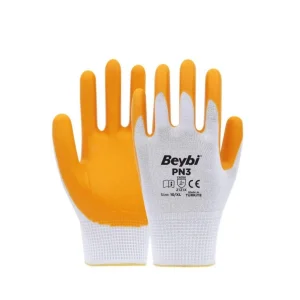


Safety equipment covers the full range of personal protective equipment (PPE) that protects workers against physical, chemical, biological and ergonomic risks in the workplace. In Türkiye, under Occupational Health and Safety Law No. 6331, employers must identify this equipment through a risk assessment and provide it to workers free of charge.
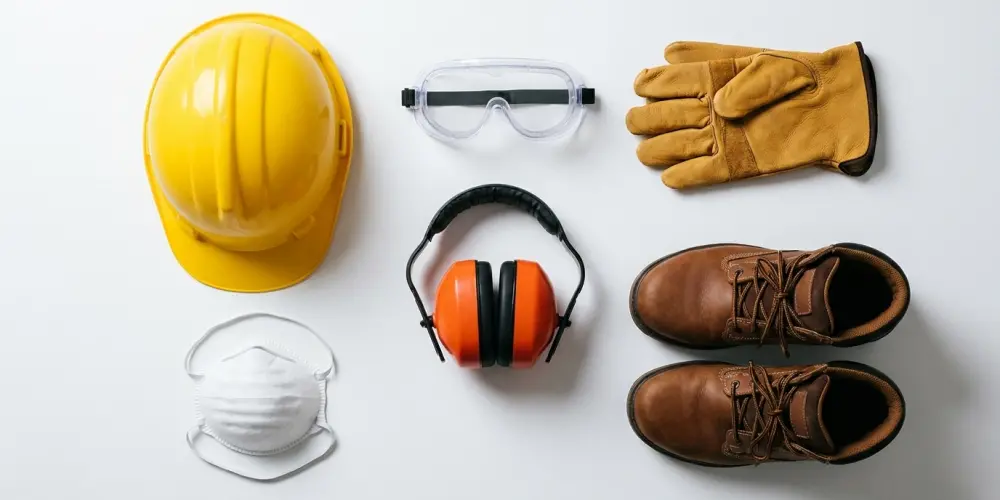
PPE means any device or equipment that a worker wears, holds or carries to protect themselves against one or more hazards. Safety helmets, gloves, safety glasses, masks, hearing protection and safety shoes all fall within this definition.
A safety helmet (hard hat) is used against head risks such as impact, penetration, electricity and chemical splashes. Helmets conforming to EN 397 must stay within specified deformation limits when struck by falling objects.
Hearing protection is mandatory in environments above 85 dB(A) (TS EN ISO 4869).
| Class | Filtration Efficiency | Applications |
| FFP1 | 80% | Low-toxicity dust, organic dust |
| FFP2 | 94% | Fine dust, fumes, biological risks |
| FFP3 | 99% | Toxic dust, asbestos, radioactive particles |
| Standard | Protection Type | Typical Use |
| EN 388 | Mechanical (abrasion, cut, puncture) | Construction, metalworking, glass |
| EN 374 | Chemical permeation | Chemicals, laboratories, cleaning |
| EN 407 | Thermal (flame, contact heat) | Welding, foundry, glass furnaces |
| EN 511 | Cold | Cold stores, outdoor work in winter |
Fall protection is mandatory for work at heights of 2 metres and above. These systems fall under Category III PPE.
Yes. In Türkiye, under Occupational Health and Safety Law No. 6331 and the PPE Regulation, employers are obliged to select and provide suitable PPE and to supervise its use. Administrative fines are imposed where shortcomings are found.
If the employer has provided training and supplied the PPE, refusal is contrary to occupational health and safety legislation in Türkiye and may lead to disciplinary action.
The 5% difference in filtration becomes decisive where toxic dusts and biological hazards are involved. FFP3 is mandatory in environments involving asbestos, radioactive particles or a high risk of infection.
No. An old-style waist belt can cause internal injuries in a fall and is no longer accepted as approved PPE. A full body harness is mandatory.
PPE issue record generator (free; Word, Excel, PDF) · Safety helmet service life and manufacture date · EN 388 glove cut resistance levels · Safety shoe size chart


We use strictly necessary cookies to run this website. With your explicit consent we also use analytics and marketing cookies; in this context some data may be transferred to service providers outside Türkiye. You can change your choice at any time. Details: Cookie Policy