

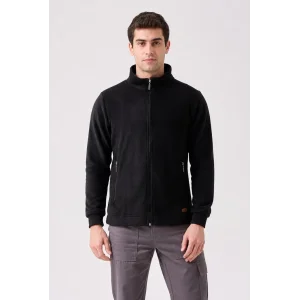



When choosing work trousers, the first things people look at are usually the colour or the number of pockets. To stay comfortable while sitting, bending and walking all day, however, you need to consider size, fit and working conditions together. Two models with the same size label may not fit the same way, and two fabrics that look alike may not suit the same season.
Short answer: Start by defining your working environment, then check the product's size chart and fabric description. Assess the waist design, leg length and pocket positions against your everyday movements. Don't decide based only on words such as “gabardine”, “summer” or “multi-pocket”.
Before ordering, write down answers to three questions: Do you spend most of the day indoors? Do you often crouch or drive? What do you carry in your pockets? This short list stops you choosing on the basis of features you don't need.
These examples relate to comfort in use. For work involving specific hazards such as electricity, flame or chemicals, do not assume that ordinary work trousers provide the protection required; follow the product specifications set by your workplace.
Check whether the manufacturer's chart gives body measurements or garment measurements taken flat. These two are not the same. You can lay a pair of trousers that fits you comfortably on a flat surface and measure the waist width and the inside leg from the crotch seam to the hem. Compare the result only with garment measurements taken the same way. If body measurements are requested, follow the product's measuring instructions. Blåkläder's size guide is an example of body and garment measurements being assessed separately; do not apply that brand's chart directly to other products.
For example, wearing size L in everyday trousers doesn't mean you should also take L in the work trousers you are looking at. Going up two sizes without measuring “just in case they're tight” can lead to bunching at the waist and legs that are too long. If you are between two sizes, ask for the model's measurements before deciding.
The fabric name in the product description and the cotton and polyester percentages tell you different things. When comparing, note the fabric name in one column and the composition in another. If the description doesn't state the ratio, don't fill it in by guessing. Don't transfer fabric details from one model to another with a similar name.
Looking only at the cotton percentage is not a sound way to choose between summer and winter trousers. Read the stated season, lining details and, where given, fabric weight together. Don't judge fabric thickness from photos alone. If information is missing from the page, ask us, quoting the product code.
| Comparison point | What to check on the product page |
|---|---|
| Size and fit | Compare waist, hip and inside leg measurements taken by the same method. |
| Fabric composition | Read the cotton and polyester ratios in the model's own description. |
| Season | Check whether it is for summer or winter use and, where given, the lining and fabric weight. |
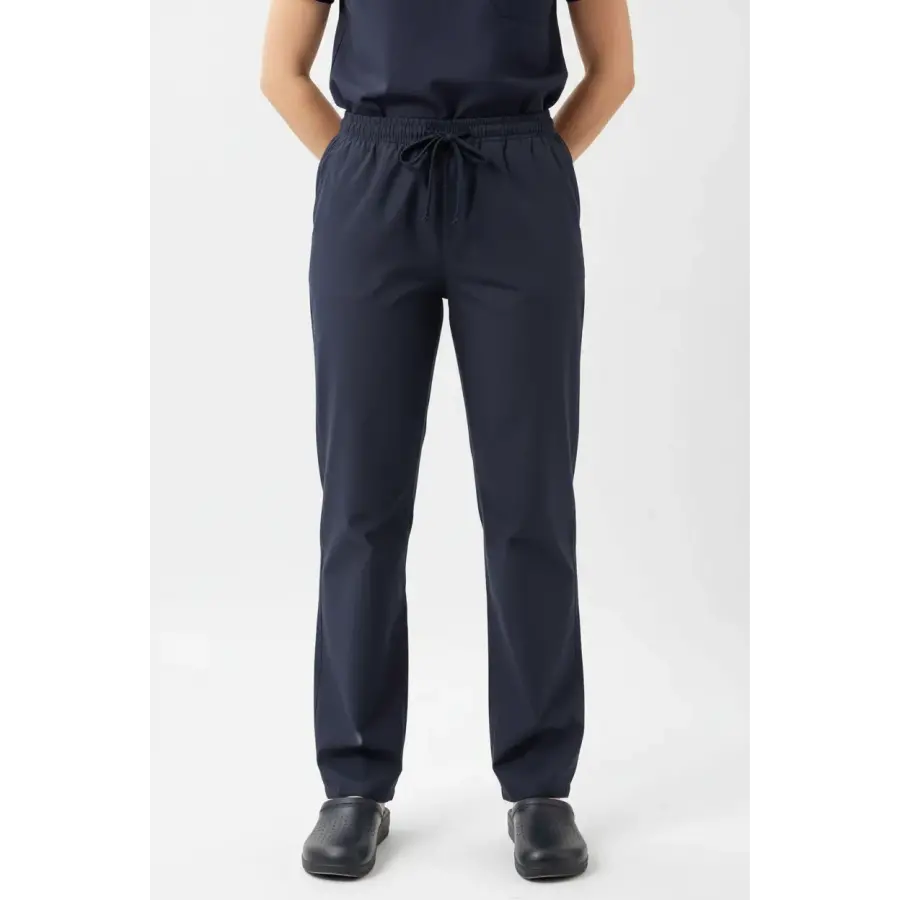
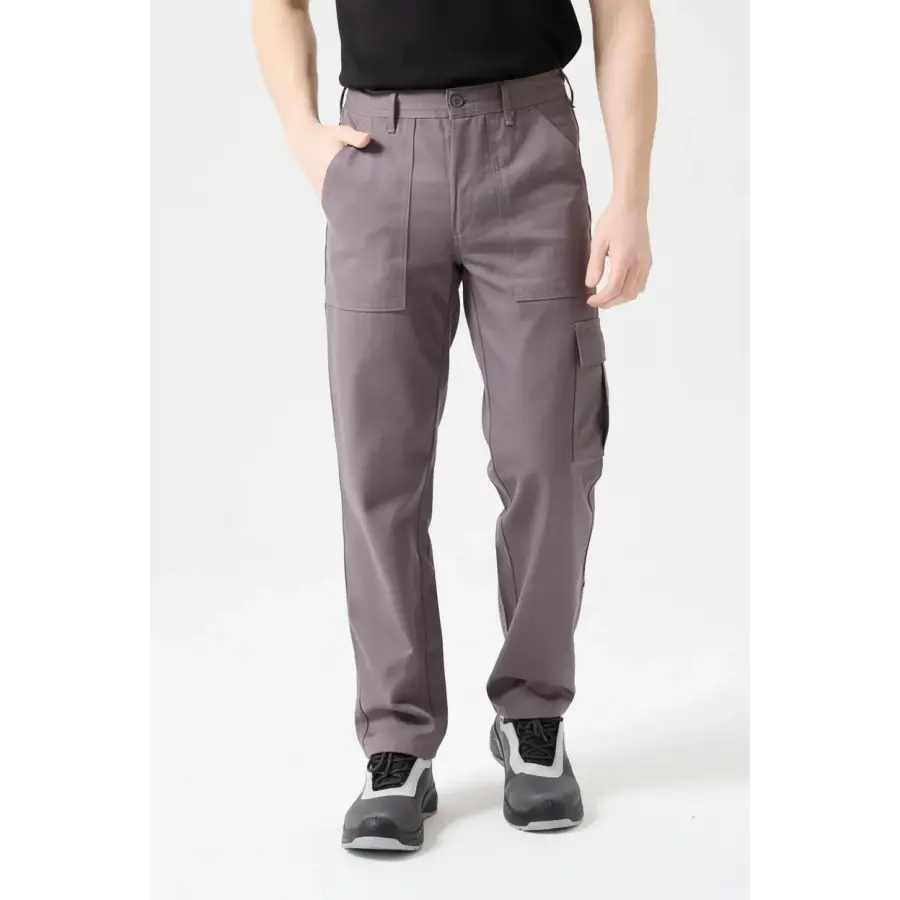
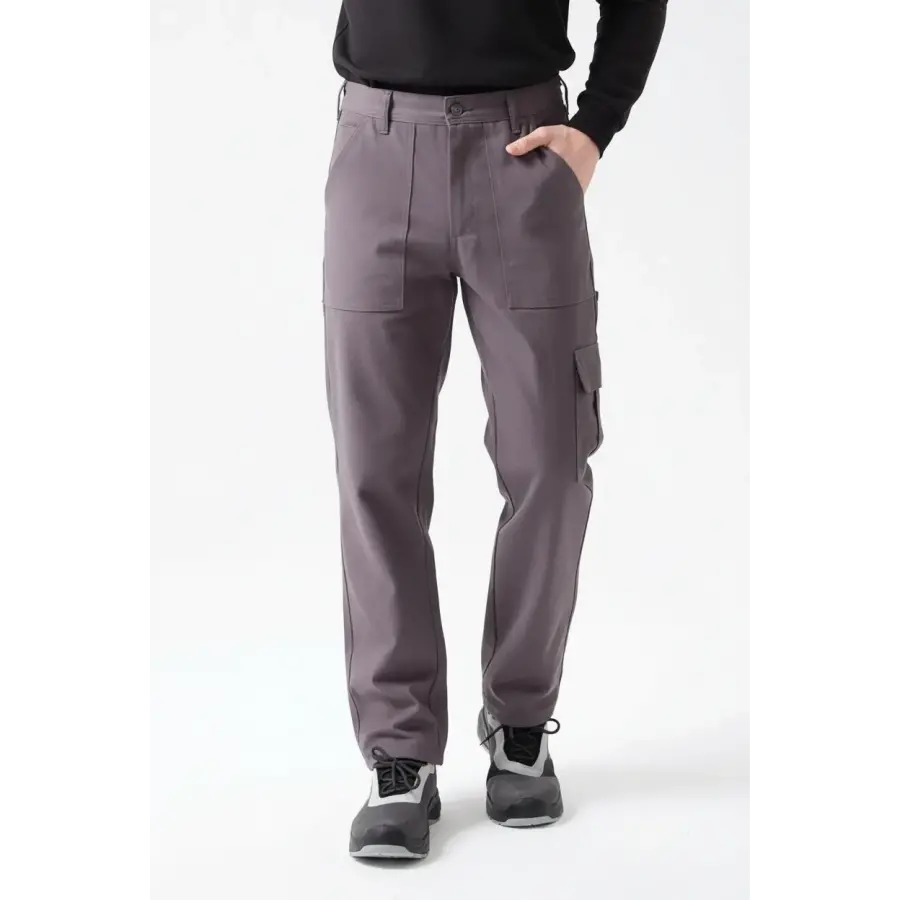
| Pockets and waist | Examine the pocket layout and waist adjustment in the product's close-up photos. |
Compare work trousers by fabric and season →
Think about your phone, keys and small hand tools separately. Having a phone pocket doesn't mean your phone will fit in it. The pocket opening, flap or zip, where items sit when you are seated, and access while wearing gloves may matter more to you. Don't assume the trousers have a load capacity for heavy items that is not clearly stated.
A semi-elasticated waist, drawstring and belt loops don't do the same job. If you need to adjust the waist during the day, check the product images to see which option is provided. “Elasticated waist” in the feature list doesn't mean the whole trouser fabric is stretchy.
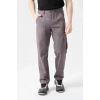
Examine the pocket layout and waist design in the product photos; check the available sizes before ordering.
View product details →Do not decide the care temperature from the fabric name alone. Follow the washing, drying and ironing instructions on the product.
Not on its own. People of the same height and weight can have different waist, hip and leg measurements. The model's own measurements give a more useful comparison.
There is no such rule that applies to every model. Consider the product's fit, its measurements and the layers you will wear underneath together.
No. The number of pockets does not replace workplace clothing requirements or specific protective features. Assess the job's requirements first, then the pocket layout.
You can browse the available models in the work trousers category. For an example of waistband and pocket design, see the current description of the grey multi-pocket work trousers with semi-elasticated waist. If any size information is missing, contact us with the product code; clarify the model's details rather than ordering on a guess.


We use strictly necessary cookies to run this website. With your explicit consent we also use analytics and marketing cookies; in this context some data may be transferred to service providers outside Türkiye. You can change your choice at any time. Details: Cookie Policy