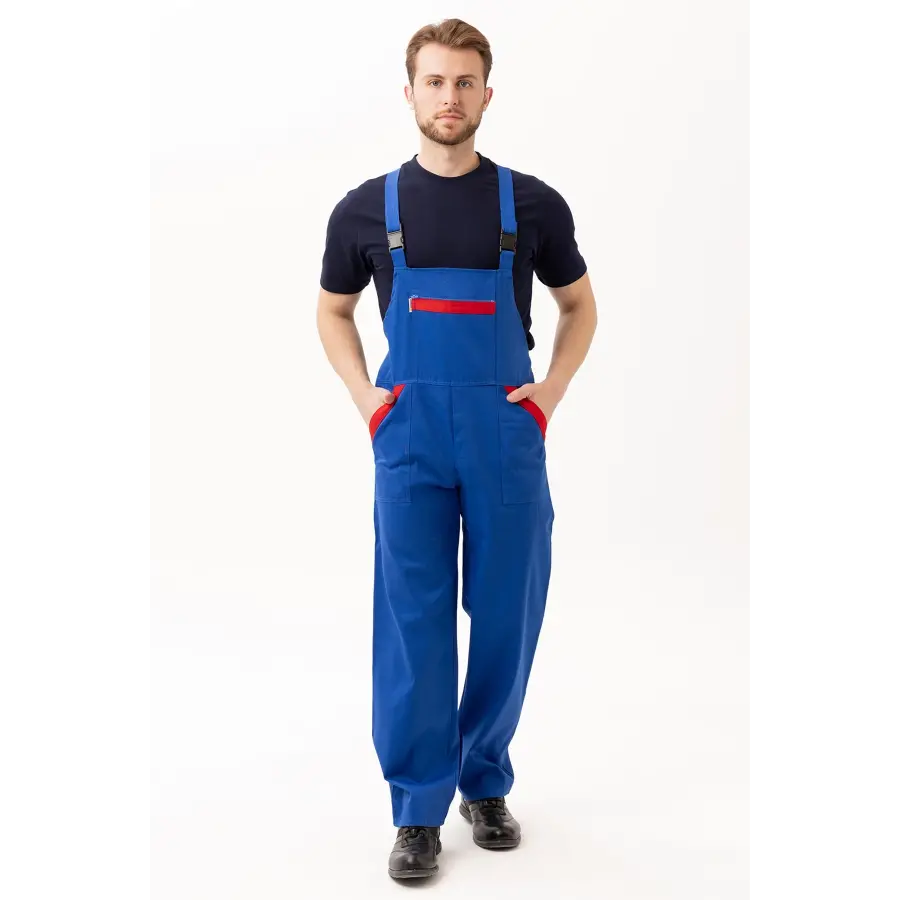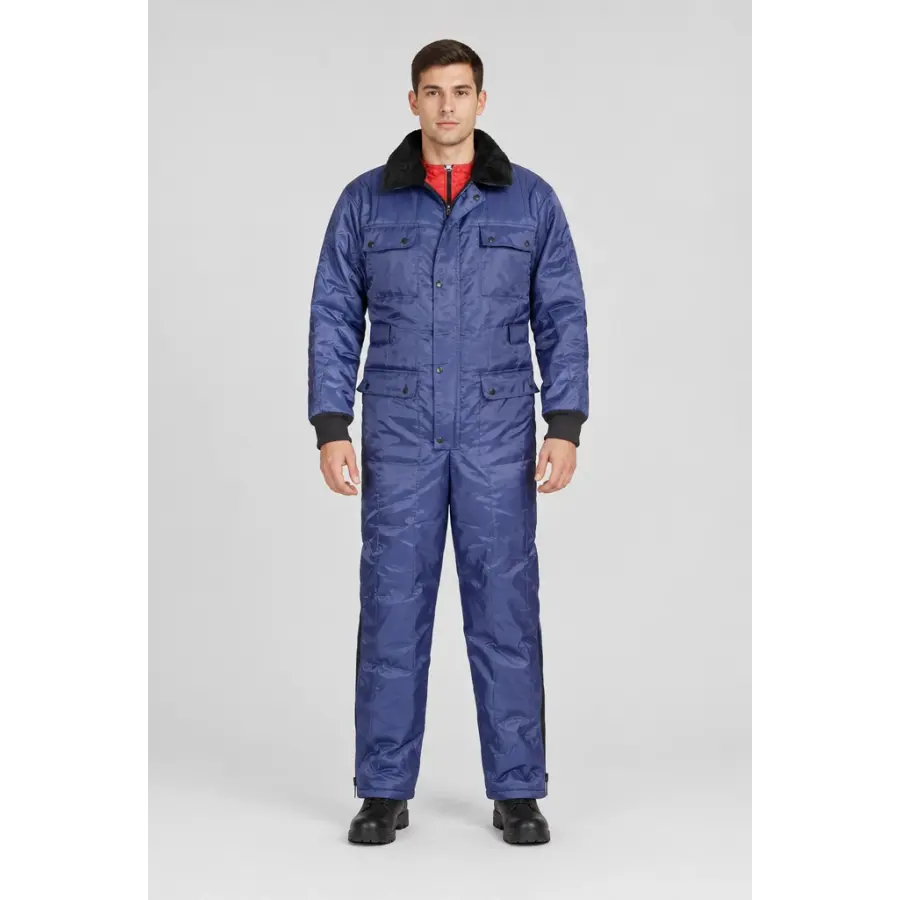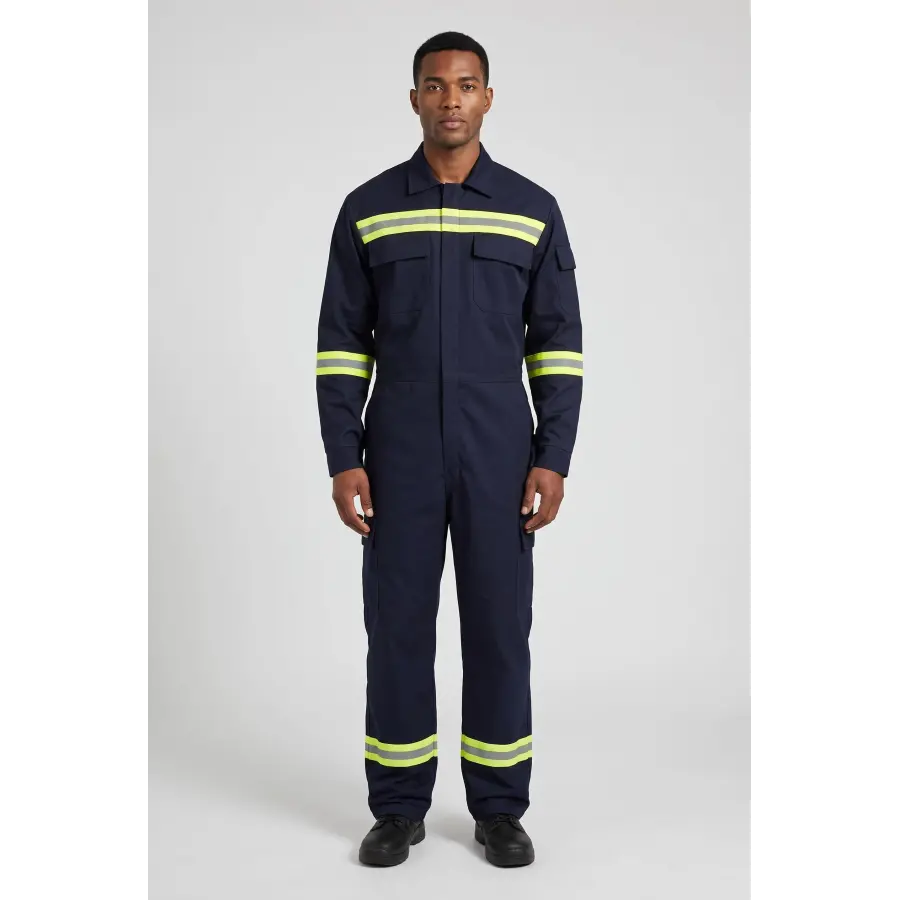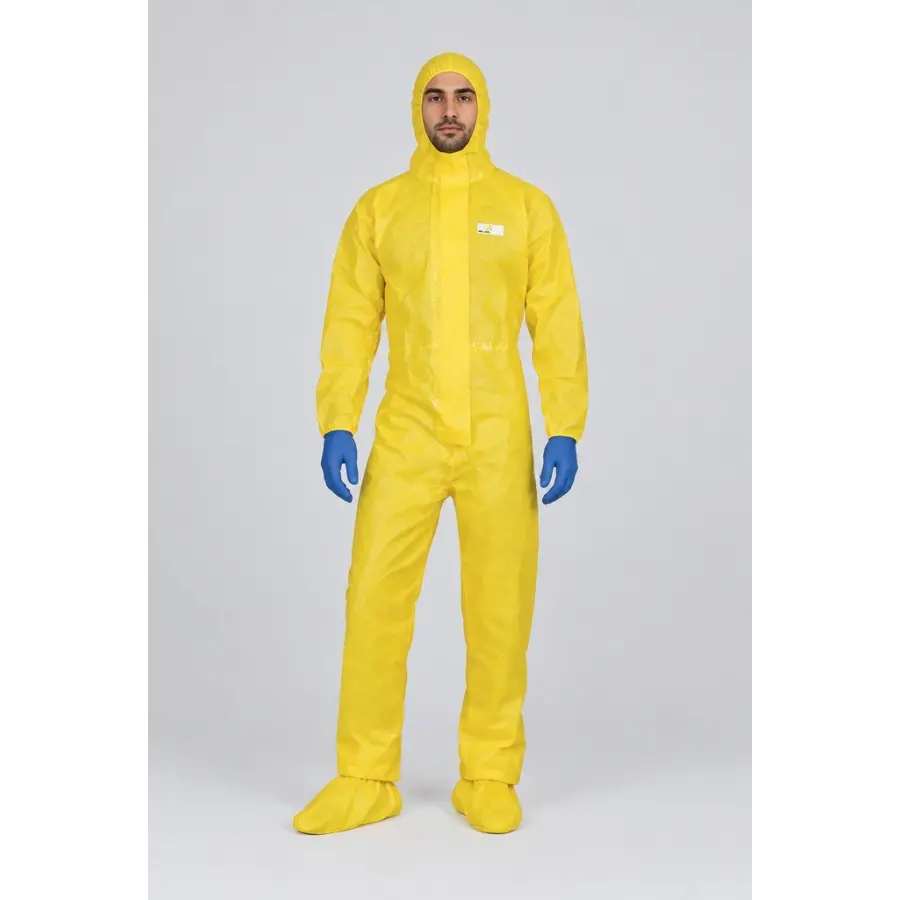




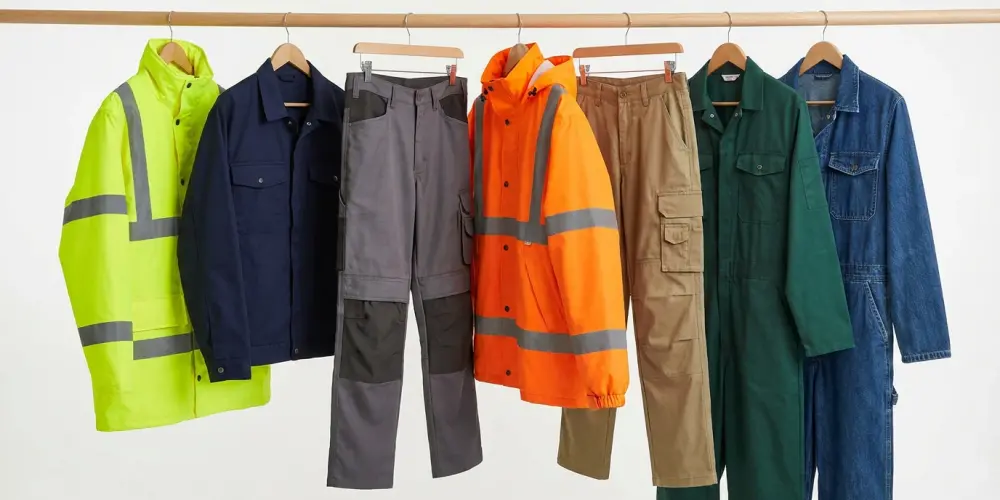
Choose workwear according to the risks of the job: flame-retardant (EN ISO 11612 / EN ISO 14116) for welding and petrochemicals, antistatic (EN 1149) for electrical work and explosive atmospheres, and hi-vis (EN ISO 20471) for traffic and construction sites. In food processing, hygiene and resistance to high-temperature washing are the key factors. Check the fit at the shoulders, lower back, sleeves and front length in the working position. For logos, embroidery is long-lasting; on flame-retardant garments, printing may compromise the protective properties.
The right workwear should improve employee comfort and also meet legal requirements. This guide covers workwear models by industry, fabric properties, standards and what to look out for when buying.
Workwear is the general term for specialised clothing designed to protect employees from workplace risks, reflect corporate identity and allow freedom of movement. Coveralls, work trousers, work coats, work shirts and bib overalls all fall into this category.
| Property | Standard | Application |
| Flame-retardant (FR) | EN ISO 11612 / EN ISO 14116 | Oil and gas, chemicals, welding |
| Antistatic | EN 1149 | Electrical, electronics, explosive atmospheres |
| Hi-vis | EN ISO 20471 | Construction, traffic, roadworks |
| Antibacterial | HACCP-compliant | Food, healthcare, cleaning |
| Water and wind resistance | Softshell / laminated fabric | Outdoor work, logistics, security |
High visibility and physical durability are the top priorities. Work trousers with reinforced knees and multi-pocket coveralls are essential kit.
Because of the risk of arc flash and electrostatic discharge, flame-retardant and antistatic fabric is mandatory.
Hygiene and HACCP compliance are the deciding criteria.
Freedom of movement and a multi-functional pocket design are the priorities.
Antibacterial properties, easy washing and liquid resistance are the key requirements. Scrub sets and lab coats are the standard clothing in this sector.
Corporate identity comes first, but tactical functionality is also expected. Multi-pocket cargo trousers, a softshell jacket and badge/logo application make up the standard set.
Long-lasting and wash-resistant. Ideal for areas with dense fabric, such as pocket flaps and shoulders.
Suitable for detailed multi-colour designs. Note: On FR garments, printing may impair the protective properties.
In Türkiye, yes for work clothing that qualifies as PPE. Under the Turkish PPE Regulation, personal protective equipment identified through risk assessment must be provided free of charge by the employer (Art. 6/1-e); Law No. 6331 also states that the cost of occupational health and safety measures cannot be passed on to employees (Art. 4/4). For corporate clothing without a protective function, the situation may vary depending on the employment contract and workplace practice; if in doubt, consult your legal adviser. To record handover, you can use our PPE issue record tool.
A coverall offers superior protection in environments with a high risk of soiling and splashes. Work trousers offer greater freedom of movement and are preferred where changing the upper garment is necessary.
Yes, it can deteriorate with improper care. Bleach and high-temperature drying permanently destroy the FR properties. Washing on a 40°C programme with liquid detergent is the general recommendation.
EN ISO 20471 defines the minimum photometric values the strips must meet after a specified number of washes. Yellowing or cracking indicates that these values are no longer met; the garment should be replaced immediately.


We use strictly necessary cookies to run this website. With your explicit consent we also use analytics and marketing cookies; in this context some data may be transferred to service providers outside Türkiye. You can change your choice at any time. Details: Cookie Policy