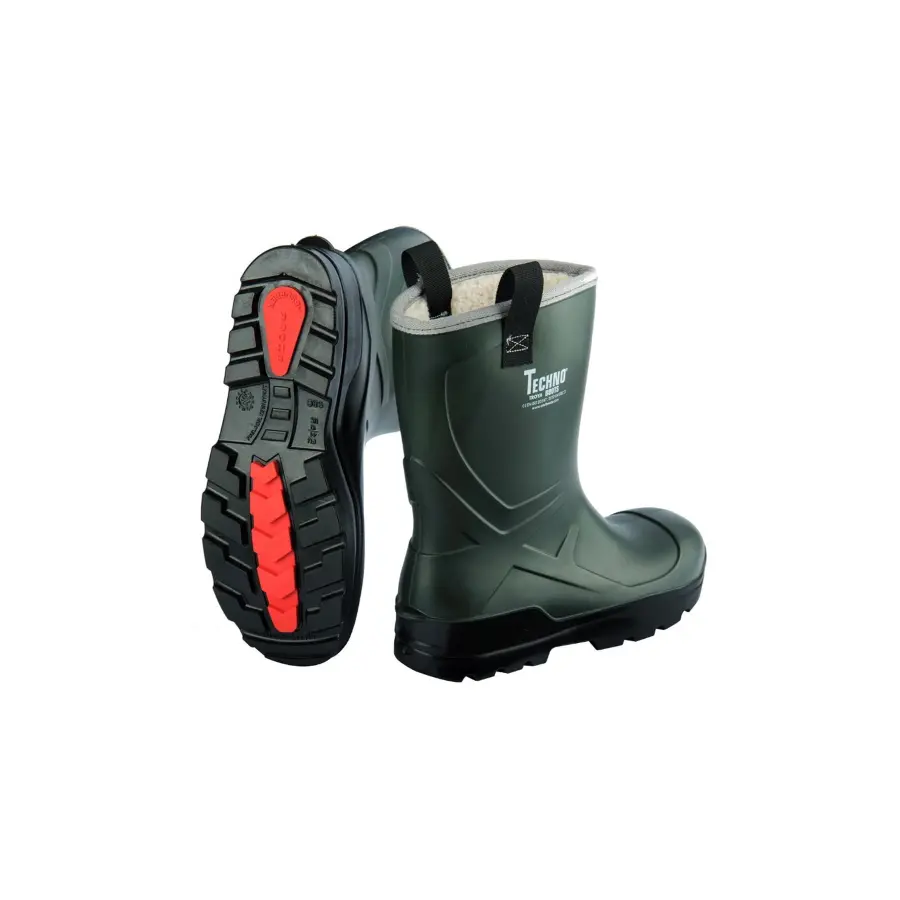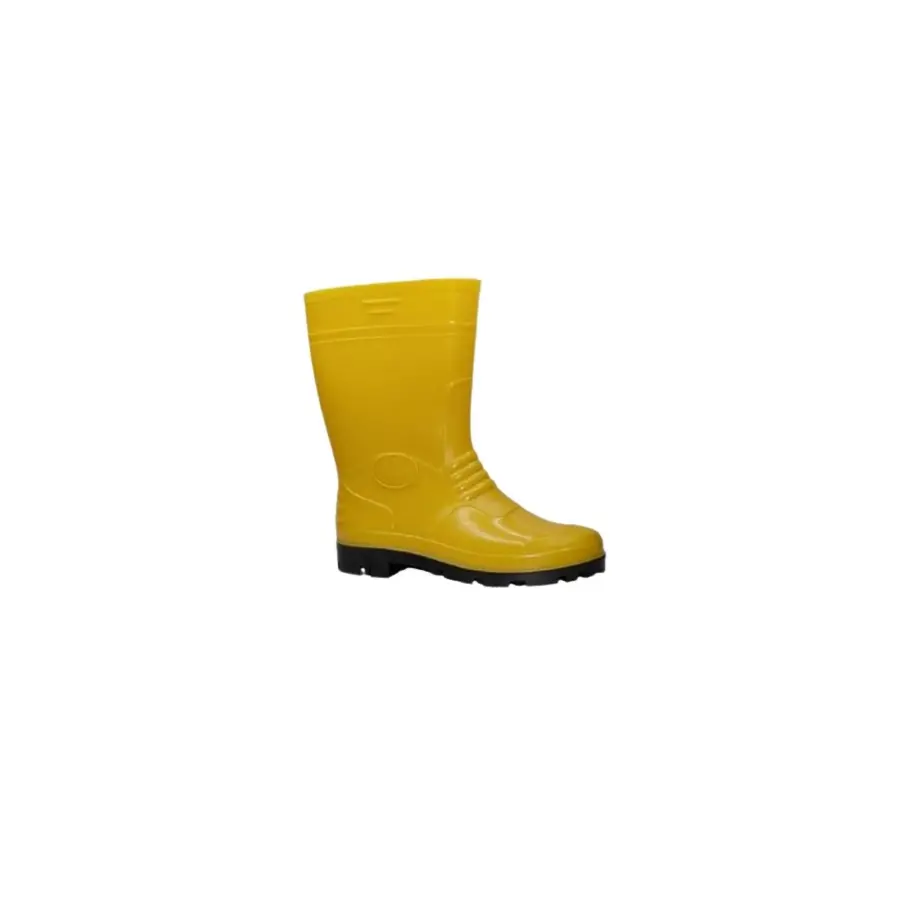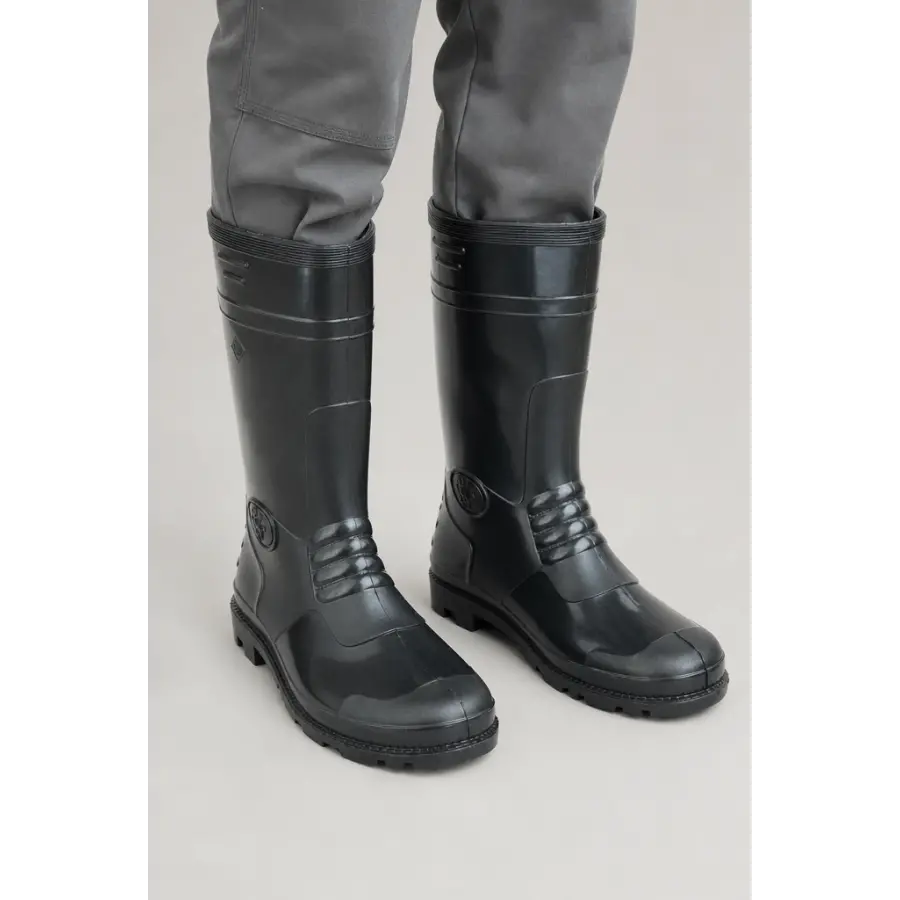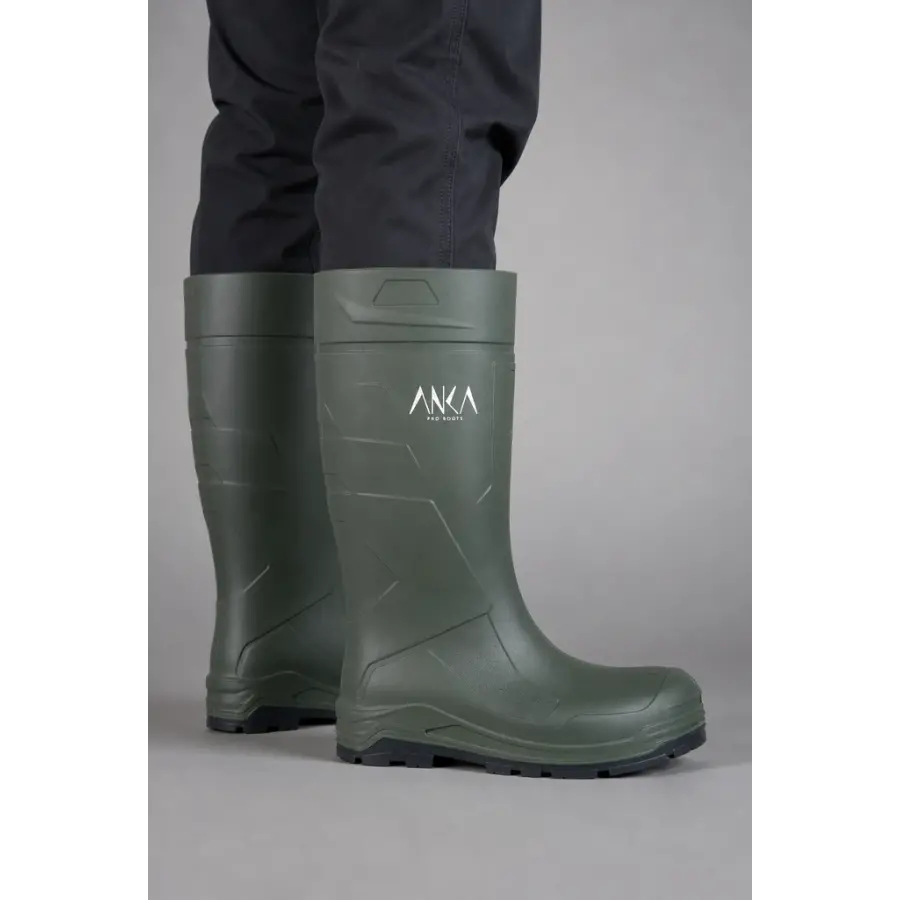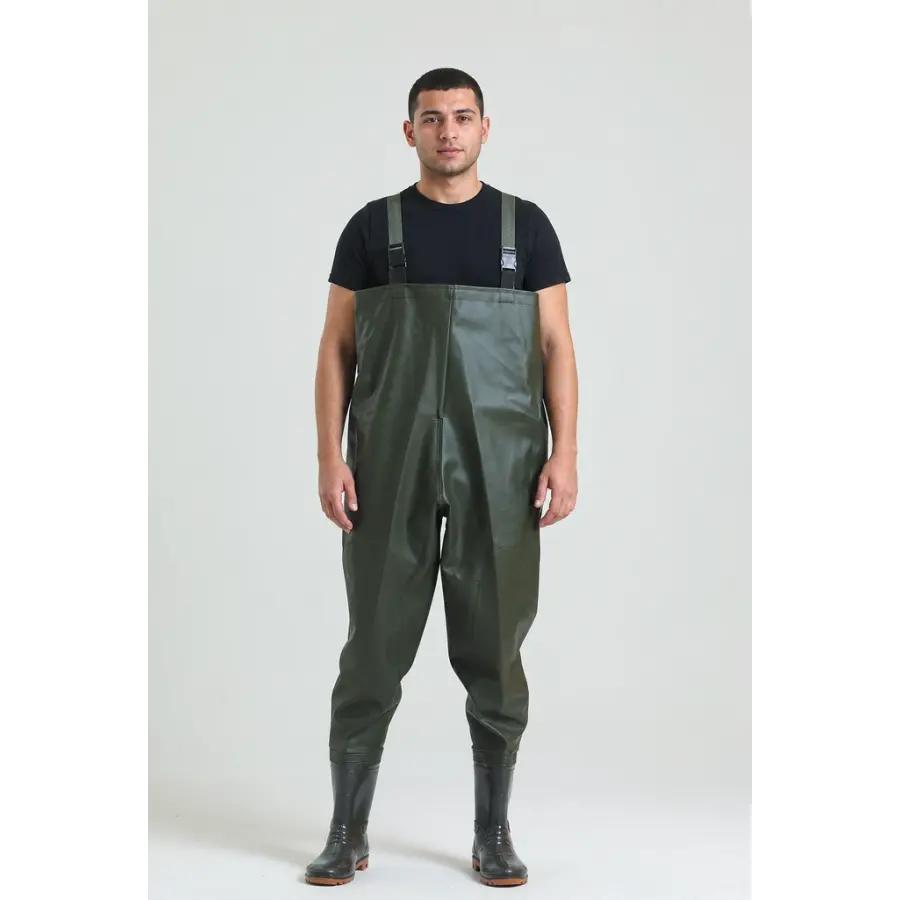




These groups are based on the safety class, material and shaft information on the product pages. Boots with no stated safety class should not be assumed to have a toe cap or puncture protection.
| Need | Boot construction | Example models |
|---|---|---|
| Water + falling objects + sharp objects | S5 safety wellington boots (toe cap + penetration-resistant sole) | Palalı S5-117 (PVC, steel toe cap + steel midsole), Techno Alaska S5 CI (PU, cold-insulated) |
| Water + falling objects, no penetration risk | S4 safety wellington boots | Mekap Anka Pro 904 S4 (steel toe cap) |
| Wet floors, work with no safety class required | Short-shaft PVC work wellingtons (no class stated) | Palalı 103 Short Shaft, Gezer 218 Short |
| Deep water, mud, fishing and gardening | Thigh waders or bib waders | İKÇ 1650 Thigh Waders, İTÇ-9000 Bib Waders |
| Cold outdoor sites (boots instead of wellingtons) | Fur-lined S3 safety boots | Sixton Montana S3 (composite toe cap, Kevlar midsole) |
Subcategories by toe type:Steel toe wellington boots · Composite toe wellington boots · Wellingtons without toe cap · Bib waders · Chest waders · Electrician's boots
When choosing work wellingtons, don't look only at boot height or material; consider the risks in your working environment together, such as water, mud, slippery floors, impact and penetration. Steel toe, composite toe and non-safety models may suit different needs.
Steel or composite toe models may be designed to protect the toes against impact and crushing risks. However, a product's overall level of protection should be judged by the relevant standard and safety class, not by the toe cap material alone.
In wet, muddy or slippery work areas, the boot's outer material, tread pattern and the floor performance stated by the manufacturer are important. If waterproofing or slip resistance is not clearly stated in the product information, don't assume it from appearance alone.
Short, tall and chest-high models may suit different working conditions. Consider together how high water or dirt may reach, how much movement you need and how long you will be working.
Compare your foot length with the manufacturer's size chart, if available. If you will wear thick socks or thermal liners, allow for this when choosing your size. The same shoe size (EU) can feel different depending on the last and materials.
If you need a lower-cut solution instead of wellingtons, you can also compare safety shoes and safety boots for your working environment.
Browse Safety Shoes Browse Safety BootsYou can browse other protective footwear in the foot protection category and other personal protective equipment in the safety equipment category.
Both are waterproof safety wellington boots with a polymer or rubber body and a toe cap. In addition to S4, S5 has a penetration-resistant sole and a cleated outsole; S5 is chosen for sites with a risk of nails or sharp objects.
CI indicates that the sole has been tested for insulation against cold. If you will be working on cold floors for long periods, models marked CI are a good choice.
PVC wellingtons are economical and easy to clean. Polyurethane wellingtons are generally more lightweight and stay flexible better in the cold. Choose according to the temperature of your working environment and how long they will be worn.
Electrical insulation is only provided by boots with a stated EN 50321-1 class; a safety class (S4/S5) or the word "antistatic" does not mean electrical insulation. For electrically insulating models, check the class information on the product page in the electrician's boots category.


We use strictly necessary cookies to run this website. With your explicit consent we also use analytics and marketing cookies; in this context some data may be transferred to service providers outside Türkiye. You can change your choice at any time. Details: Cookie Policy