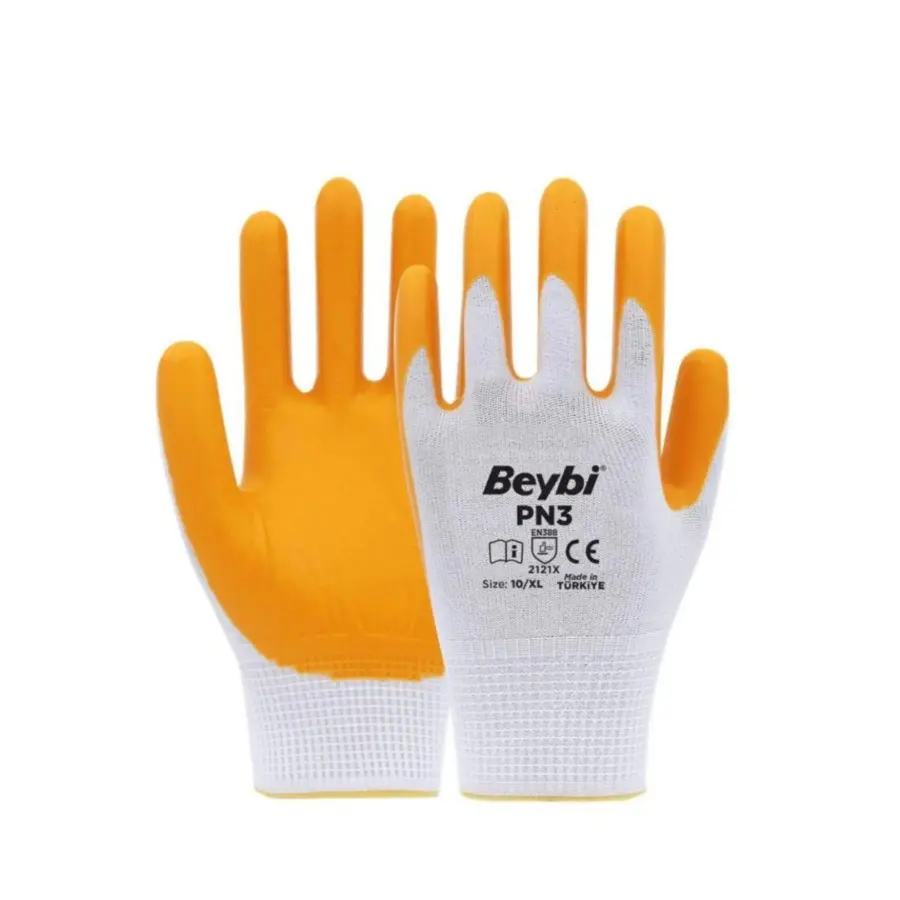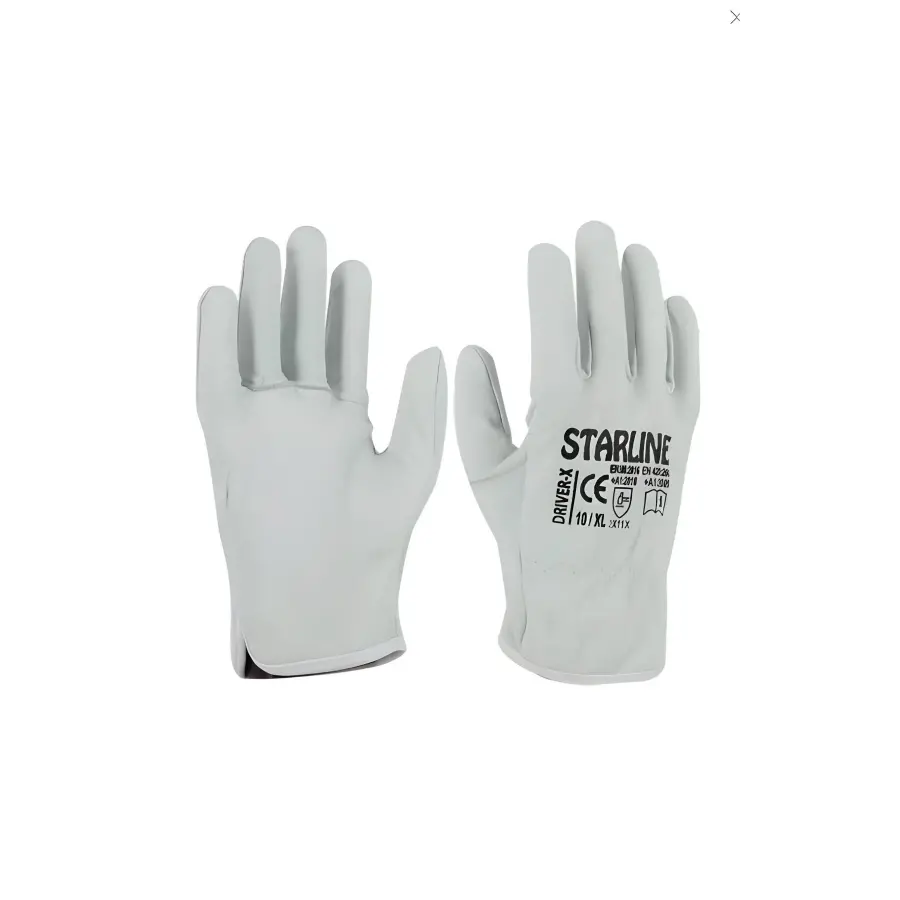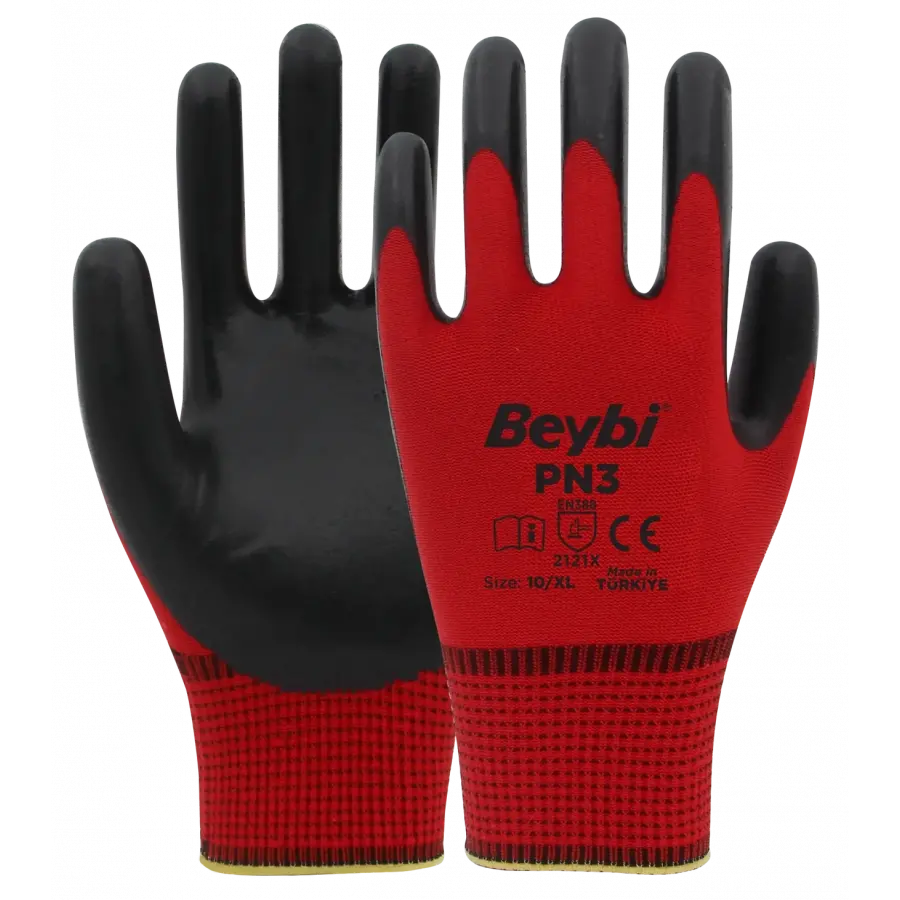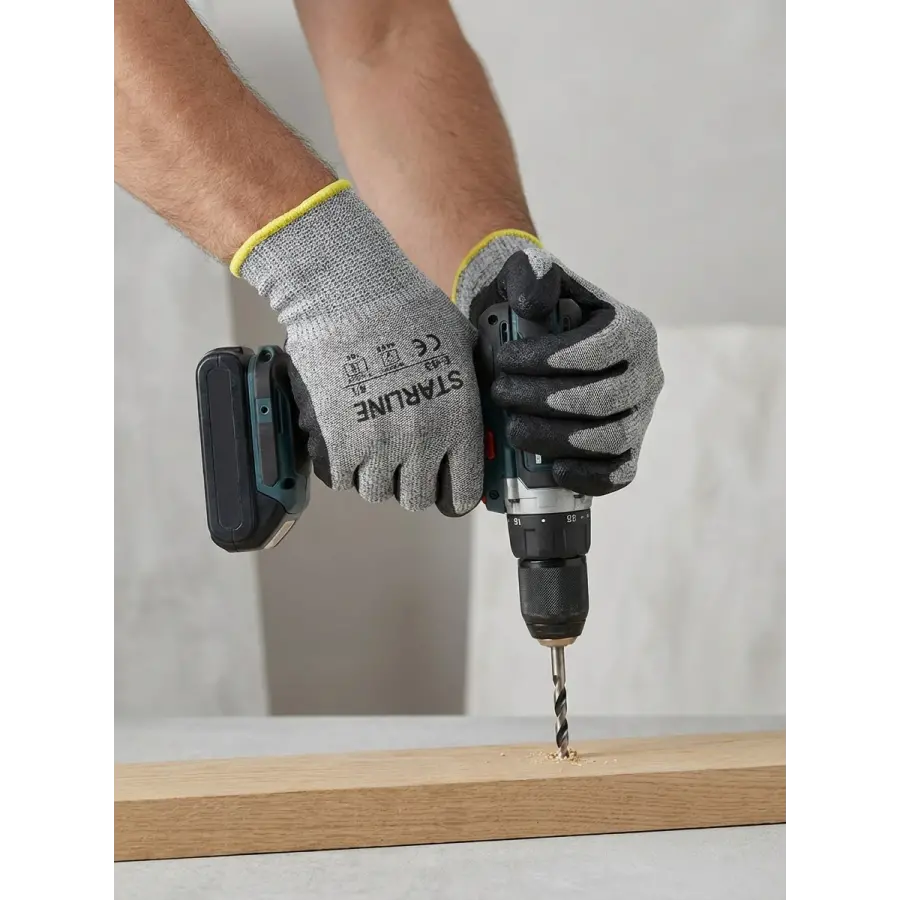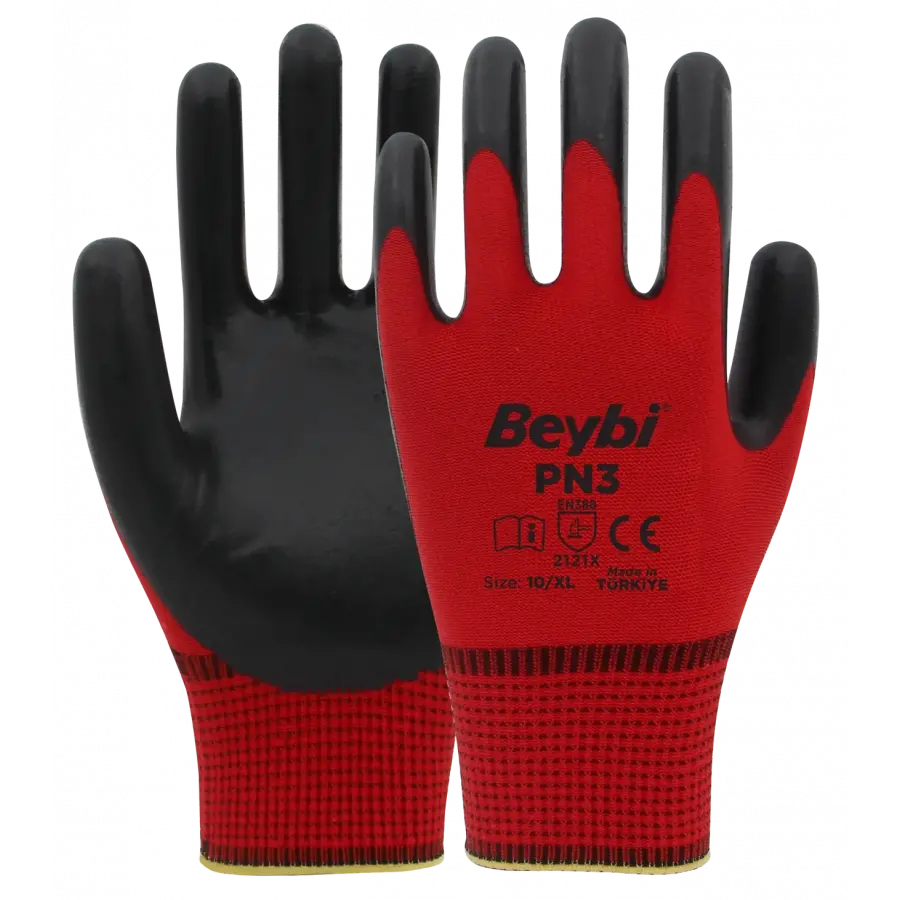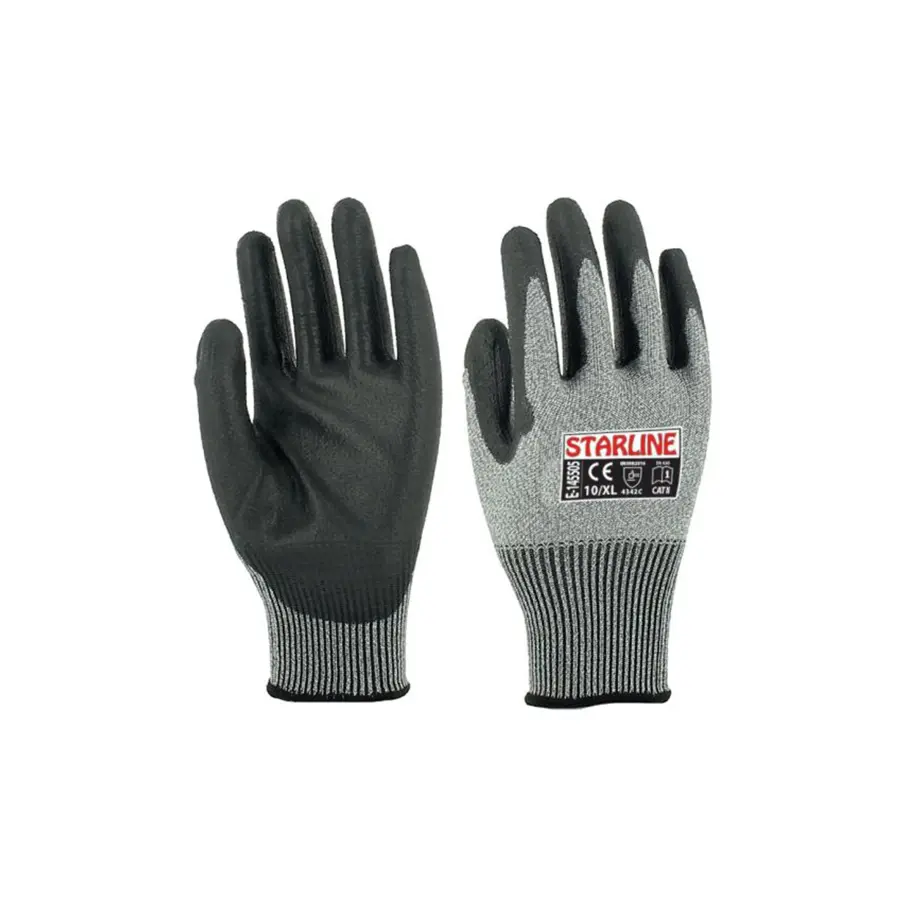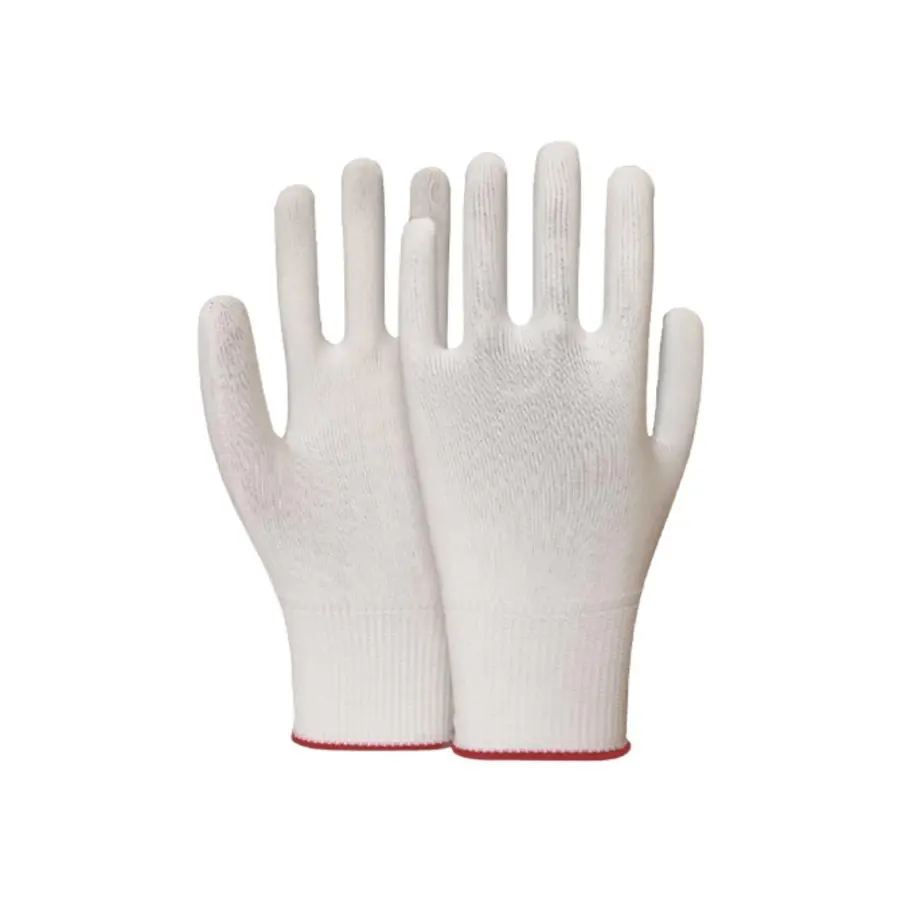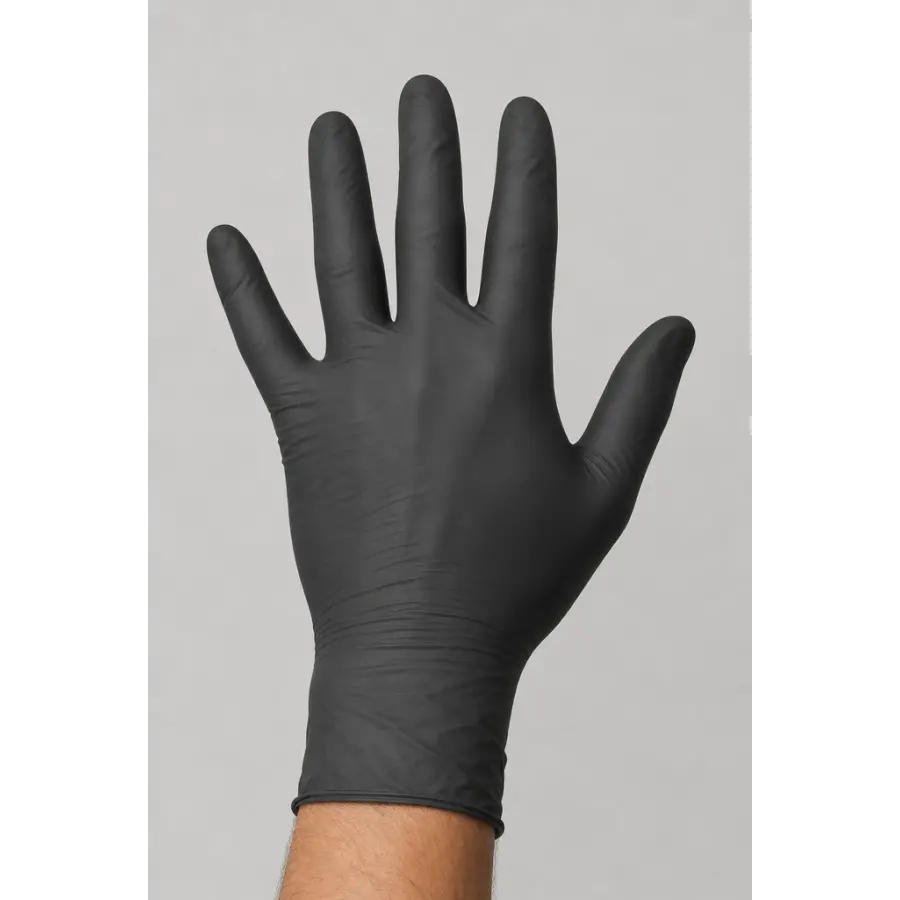






EN 388 shows how work gloves perform against mechanical risks. The code beneath the shield symbol indicates, in order, the abrasion (0–4), cut (0–5), tear (0–4) and puncture (0–4) levels. The fifth character shows the ISO 13997 (TDM) cut level (A–F), and the sixth character P, if present, indicates impact protection. For example, in the code "4X43C", C means the glove achieved a cut resistance of at least 10 N in the TDM test.
| Position | Property | Scale | What is measured? |
|---|---|---|---|
| 1 | Abrasion resistance | 0–4 | Number of cycles withstood in the sandpaper abrasion test |
| 2 | Blade cut resistance (Coup test) | 0–5 | Cut index according to the Coup test |
| 3 | Tear resistance | 0–4 | Force required to tear (N) |
| 4 | Puncture resistance | 0–4 | Force required to puncture (N) |
| 5 | Cut resistance TDM (EN ISO 13997) | A–F | Force required to cut with a straight blade (N) |
| 6 | Impact protection | P | If present: transmitted force ≤ 7 kN under a 5 J impact, tested to the EN 13594 method |
The letter X means the test was not carried out or is not applicable to the glove. Levels are graded from 0 (low) up to the highest level; a higher number means greater resistance.
According to the official table on the PPE Support Portal of the Ministry of Labour and Social Security in Türkiye (TS EN 388), the level thresholds are as follows:
| Property | Level 1 | Level 2 | Level 3 | Level 4 | Level 5 |
|---|---|---|---|---|---|
| Abrasion (cycles) | 100 | 500 | 2,000 | 8,000 | – |
| Coupe cut (index) | 1.2 | 2.5 | 5.0 | 10.0 | 20.0 |
| Tear (N) | 10 | 25 | 50 | 75 | – |
| Puncture (N) | 20 | 60 | 100 | 150 | – |
| Level | A | B | C | D | E | F |
|---|---|---|---|---|---|---|
| Minimum force (N) | 2 | 5 | 10 | 15 | 22 | 30 |
According to the Ministry of Labour and Social Security in Türkiye, a glove qualifies as a mechanical risk glove only if it achieves at least level 1 in abrasion, cut, tear or puncture, or at least level A in the TDM cut test.
The original Coup test did not give reliable results when high-performance fibres blunted the blade. For this reason, the 2016 revision added the TDM test (EN ISO 13997). If the material blunts the blade, TDM becomes the reference test; in this case some manufacturers enter an X in the second digit and state cut performance in the fifth digit (A–F). So for tasks with a cut risk, checking the letter in the fifth position gives a more accurate comparison.
According to the Turkish Ministry of Labour and Social Security (ÇSGB), it must be stated that gloves with a tear resistance of 1 or higher should not be used where there is a risk of entanglement in moving machine parts. When working with rotating machinery, glove selection should be based on a risk assessment.
The glove size refers to the measurement of the hand, not the glove. According to manufacturer charts based on EN ISO 21420:
| Size | Hand circumference (mm) | Hand length (mm) |
|---|---|---|
| 6 | 152 | 160 |
| 7 | 178 | 171 |
| 8 | 203 | 182 |
| 9 | 229 | 192 |
| 10 | 254 | 204 |
| 11 | 279 | 215 |
The EN 388 code is printed on the glove or its packaging, below the shield symbol.
Some product pages in our work gloves category do not yet show the code. If you need a specific level (for example TDM C or above), ask us before ordering and we will share the code from the product label. For electrical work, look for the insulation standard (EN 60903), not EN 388: Electrician gloves guide.Sources:ÇSGB PPE Portal – Hand and arm protective equipment · MAPA Professional EN 388 brochures (2016, 03/2026) · Ejendals TEGERA EN 388 and size guide · Uvex safety glove standards and size chart · BSI product pages (EN 388, EN ISO 21420)
This guide was prepared by Vitrin Online on 10.10.2026 with reference to the manufacturer and public sources listed above. Manufacturer information may vary by model and version; always rely on the Turkish user instructions supplied with the product and on your workplace risk assessment.


We use strictly necessary cookies to run this website. With your explicit consent we also use analytics and marketing cookies; in this context some data may be transferred to service providers outside Türkiye. You can change your choice at any time. Details: Cookie Policy