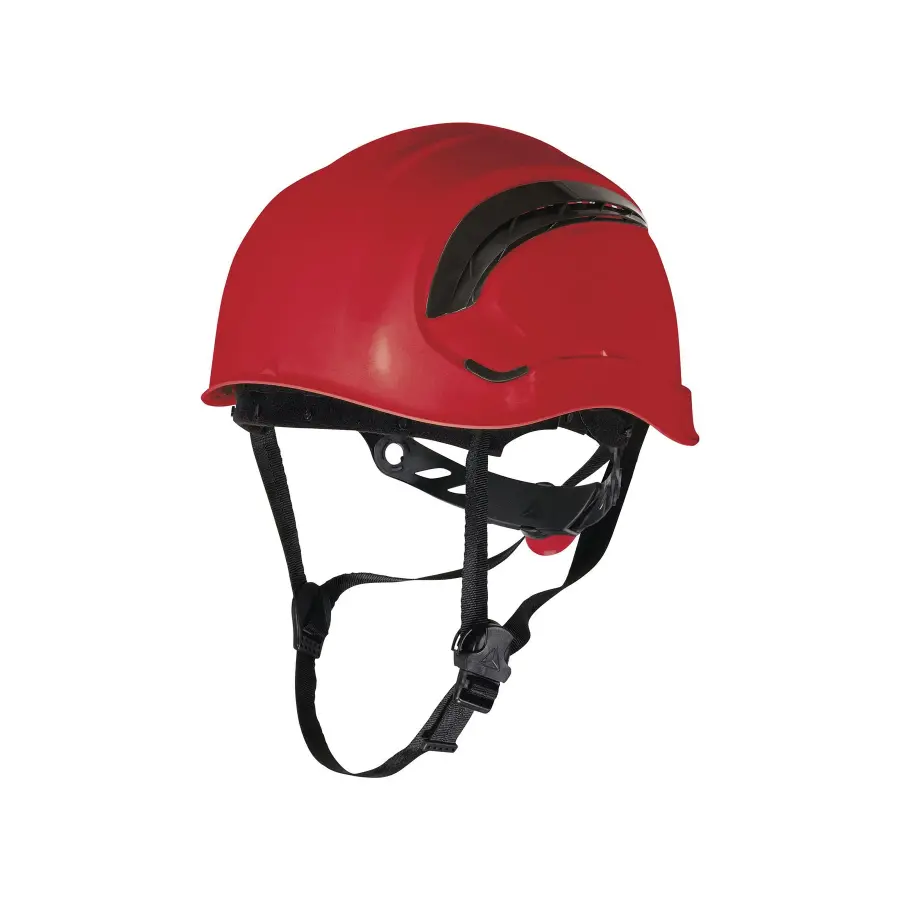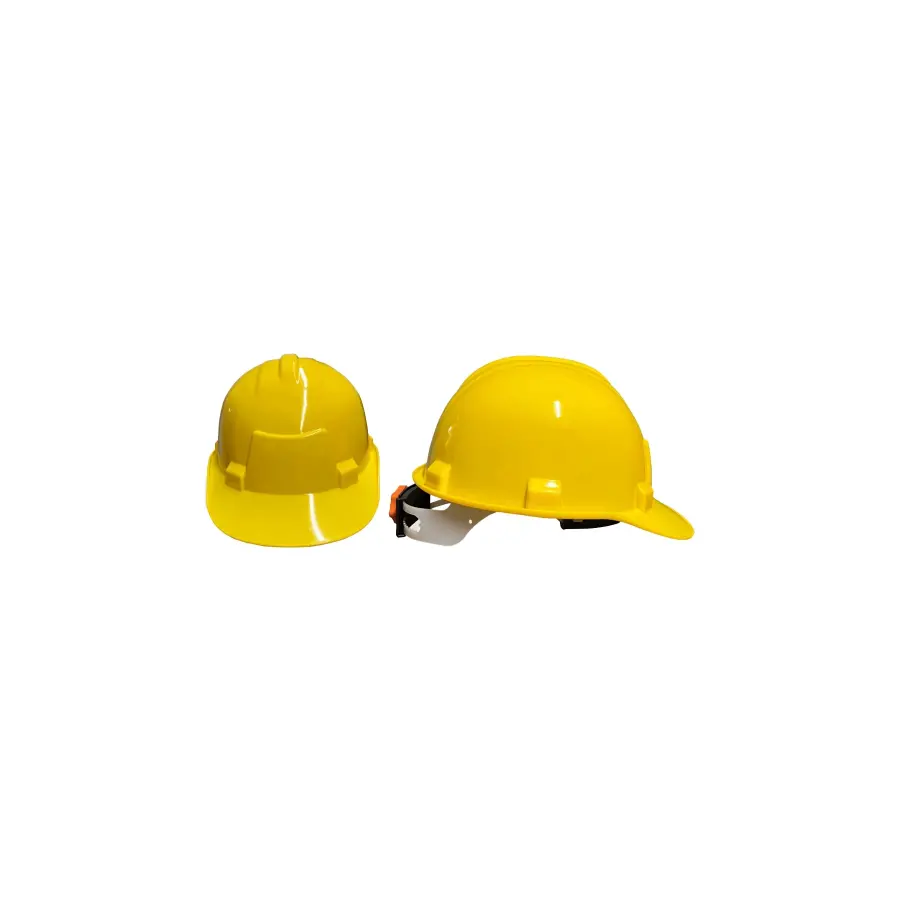





In Türkiye there is no single legal service life for a safety helmet. The TS EN 397 standard does not set a fixed number of years; according to the PPE portal of the Ministry of Labour and Social Security (ÇSGB), the manufacturer states the expiry date or service life. Depending on material and model, manufacturers' declarations range from 2–5 years from first use to 5–10 years from the date of manufacture. A hard hat that has taken an impact, is cracked, or has been exposed to chemicals or an electric shock must be replaced immediately, regardless of its age.
The PPE Support Portal of the ÇSGB Directorate General of Occupational Health and Safety states that helmet manufacturers are required to supply, in Turkish with every helmet, "information on the expiry date or service life of the helmet and its parts". According to the same page, "the shelf life and service life specified by the manufacturer must be taken into account when using helmets."
The PPE Regulation in Türkiye also requires periods of use to be determined according to the level of risk, frequency of exposure, the characteristics of the workplace and the performance of the equipment (Art. 6/1-c). In other words, the correct answer is always written in the user instructions for your helmet.
The values below are taken from the manufacturers' own technical documents. "From manufacture" and "from first use" are two separate clocks; many manufacturers apply both and go by whichever runs out first.
| Brand / model | Manufacturer's declaration | Note |
|---|---|---|
| 3M Peltor G3000 | Up to 5 years from the date of manufacture (indicative) | Replace earlier if the Uvicator sensor turns white |
| Delta Plus Quartz Up IV (PP) | 2–3 years from first use or 5 years from manufacture | User instructions, 27.11.2023 |
| Delta Plus Granite Wind (ABS) | 48 months from first use, 84 months from manufacture | Delta Plus product page |
| Delta Plus general | ABS helmets 7 years; polypropylene (PP) and high-density polyethylene (HDPE) helmets 5 years | Under optimum conditions of use |
| JSP | Up to 5 years in storage unused; 5 years from first use or 10 years from manufacture (whichever comes first) | Typical use in harsh conditions: 6 months–2 years |
| uvex pheos / airwing | Up to 4 years' storage before first use + 4 years from first use | The date of first use should be recorded |
| MSA V-Gard (USA, ANSI) | Shell no more than 5 years, harness no more than 12 months (from entry into service) | US market instructions |
| Karam | Shelf life of up to 5 years for a helmet stored under ideal conditions | General FAQ statement; check the instructions for the specific model |
Our
head protection range includes the 3M and Delta Plus models listed above. For Karam and other brands, check the user instructions supplied with the product for the model-specific service life; if you don't have them, ask us.The year and quarter of manufacture are among the mandatory markings under TS EN 397. The date is usually found under the peak or inside the shell, as a moulded "clock" or a label:
Tip: Because service life is also counted from first use, write the date on the safety helmet when it is issued to the worker.
Our PPE issue record tool includes a "Note / replacement" field for this.The red disc on the 3M G3000 series is a UV sensor called Uvicator. According to 3M, as the hard hat is exposed to sunlight, the disc turns clockwise from red to white depending on the amount of UV received; when the disc has turned completely white, the hard hat has reached the maximum UV exposure it can take and must be replaced. Do not stick any labels over the disc, otherwise the sensor cannot work.
Uvicator only indicates sun (UV) ageing. Physical and chemical damage must be checked separately; a hard hat that is cracked or has taken an impact must not be used, even if the disc is still red.
| Marking | Meaning |
|---|---|
| EN 397 | Standard number |
| Manufacturer's name / mark | Mandatory |
| Year and quarter of manufacture | Mandatory (date clock) |
| Type and size range | Mandatory; the type is marked on both the shell and the harness |
| ABS, PC, HDPE… | Abbreviation of the shell material |
| -20 °C / -30 °C | Very low temperature (optional test) |
| +150 °C | Very high temperature (optional) |
| 440 Vac | Insulation against brief, accidental contact with 440 V alternating current (optional); ventilated shells cannot pass this test |
| LD | Lateral deformation (optional) |
| MM | Molten metal splash (optional) |
If high-voltage insulation is required for electrical work, check for certification to the separate standard EN 50365 (double triangle symbol). Check the certification of the electricians' hard hats on our site on each product page.
New edition:EN 397:2025 is replacing EN 397:2012+A1:2012. The new edition introduces a distinction between Type 1 and Type 2, removes the 440 V option and leaves electrical insulation to EN 50365:2023. Products with existing certificates may still be placed on the market for the validity period of their certificates. The replacement time for a hard hat already in use is still determined by the service life stated by the manufacturer.
There is no single legal period. According to manufacturers' declarations, unused storage life is 4–5 years (JSP and Karam a maximum of 5 years, uvex 4 years). The service life after first use is added to the storage period; many manufacturers also set an overall upper limit counted from the date of manufacture.
It is 3M's Uvicator UV sensor. It turns from red to white with exposure to sunlight; once it has turned completely white, the hard hat should be replaced.
We found no rule in Turkish legislation linking hard hat colour to job role; colours are a workplace or site convention and vary even between manufacturers. uvex states that on large construction sites white is used for visitors or architects, and red for supervisors, foremen or electricians. Karam, on the other hand, recommends white for site managers, engineers and inspectors, and red for fire wardens. Follow your workplace's colour policy.
We found no separate replacement period in years for the harness in European manufacturers' user instructions. MSA's US user instructions recommend replacing the suspension at least every 12 months. The harness should be replaced when worn, or within the period stated in the user instructions.
Related products:
Head protection · Face shields · PPE guide · PPE issue recordSources:ÇSGB PPE Portal – Head protection equipment · PPE Regulation · 3M G3000/G3001 technical data sheet (2019) and Uvicator brochure · Delta Plus Quartz I / Quartz Up IV user instructions (27.11.2023), Granite Wind product page, Delta Plus expert advice · JSP general hard hat user instructions (05.2025) and support pages · uvex pheos / airwing user instructions; uvex colour guide · MSA "Industrial helmets according to EN 397" and V-Gard (US) bulletin · KARAM FAQ
This guide was prepared by Vitrin Online on 10.10.2026 with reference to the manufacturer and public sources listed above. Manufacturer information may vary by model and version; always follow the user instructions supplied with the product and your workplace risk assessment.


We use strictly necessary cookies to run this website. With your explicit consent we also use analytics and marketing cookies; in this context some data may be transferred to service providers outside Türkiye. You can change your choice at any time. Details: Cookie Policy