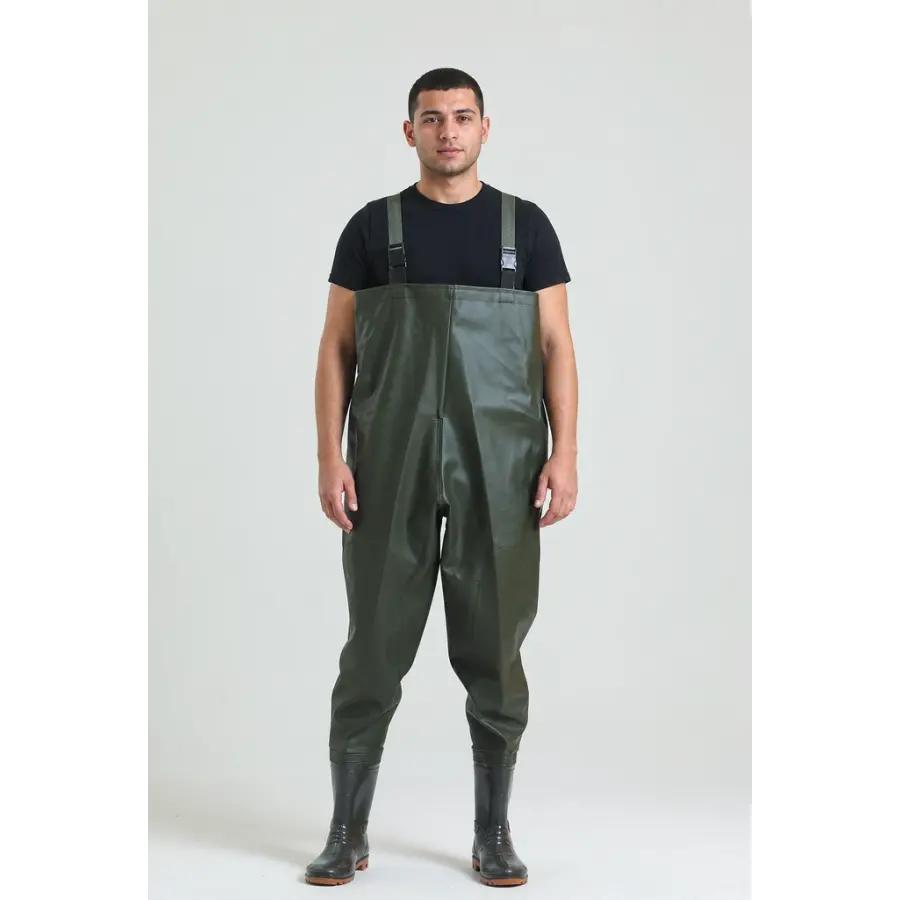




No single type of work footwear suits every environment. Safety shoes, safety boots, safety wellingtons and models designed for electrical hazards should each be assessed according to the working environment, floor conditions and the protective features required.
Not sure about the differences between the S1P and S3 safety classes?
To compare puncture resistance, water-related requirements, sole construction and applications, read our guide to the differences between S1P and S3 safety shoes.
The examples below have been selected based on the label information on the product pages. For a full explanation of class codes and additional markings (such as SRC, ESD, HRO), see our guide How to Read a Safety Shoe Label.
| Class | In brief | Example models |
|---|---|---|
| S1 | Toe cap, closed heel, antistatic, energy absorption in the heel. No water or puncture protection. | Mekap 030 Rolax S1, Mekap Havai RMK 10 S1 |
| S1P | S1 + puncture-resistant sole. Dry floors with a risk of nails or sharp objects. | Armadillo 99330 S1P, Mekap 157 S1P |
| S2 | S1 + upper resistant to water penetration and absorption. No puncture protection. | Mekap 106 Rolax S2, Stronex ST-102 S2 |
| S3 | S2 + puncture resistance + cleated outsole. Outdoor sites and construction. | Mekap 106 Rolax S3, Mekap 023R Rolax S3 (boot) |
| S4 / S5 | Waterproof boots with a polymer/rubber body; S5 is also puncture-resistant. | Mekap Anka Pro 904 S4, Palalı S5-117 |
| O1 (no toe cap) | Occupational footwear: no toe cap. For work with no crushing risk. | Mekap 158 Jüpiter O1, Sixton Randa O1 (ESD) |
Footwear marked antistatic or ESD does not provide electrical insulation; for live working, check that an EN 50321-1 insulation class is stated on the product page.
Low-cut safety shoes in various safety classes and toe cap types.
Browse Safety ShoesSafety boots offering more ankle coverage, with steel, composite and other types of protection.
Browse Safety BootsShort and tall boot options for wet, muddy or varied site conditions.
Browse Safety WellingtonsClasses such as S1, S1P, S2 and S3, and features such as steel, composite or aluminium toe caps, are different parts of choosing the right footwear. Do not treat any single feature as sufficient on its own; review the standard the product complies with and its technical markings together.
On wet, oily, slippery floors or where there is a risk of sharp penetrating objects, outsole properties become important when choosing footwear. If slip or penetration resistance is required, refer to the product's current technical documentation.
Consider shoe and boot models with documented electrical properties separately from standard safety shoes.
Electrician Safety Shoes Electrician Safety BootsYou can browse other personal protective equipment in the safety equipment category.


We use strictly necessary cookies to run this website. With your explicit consent we also use analytics and marketing cookies; in this context some data may be transferred to service providers outside Türkiye. You can change your choice at any time. Details: Cookie Policy