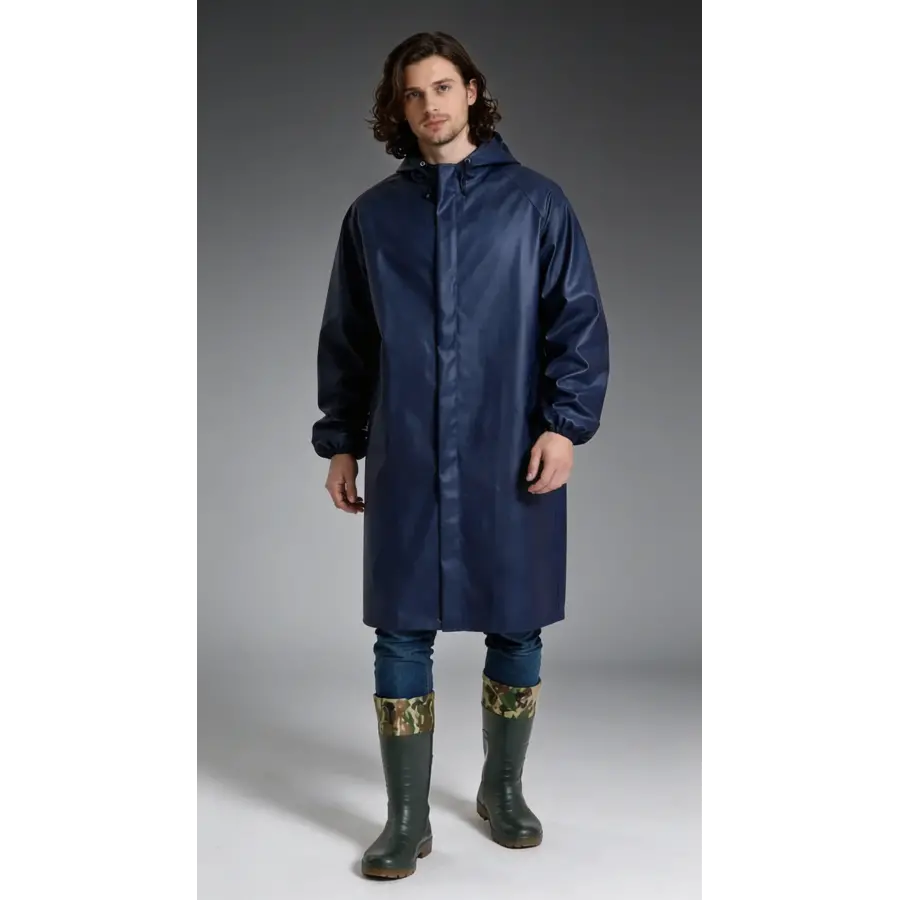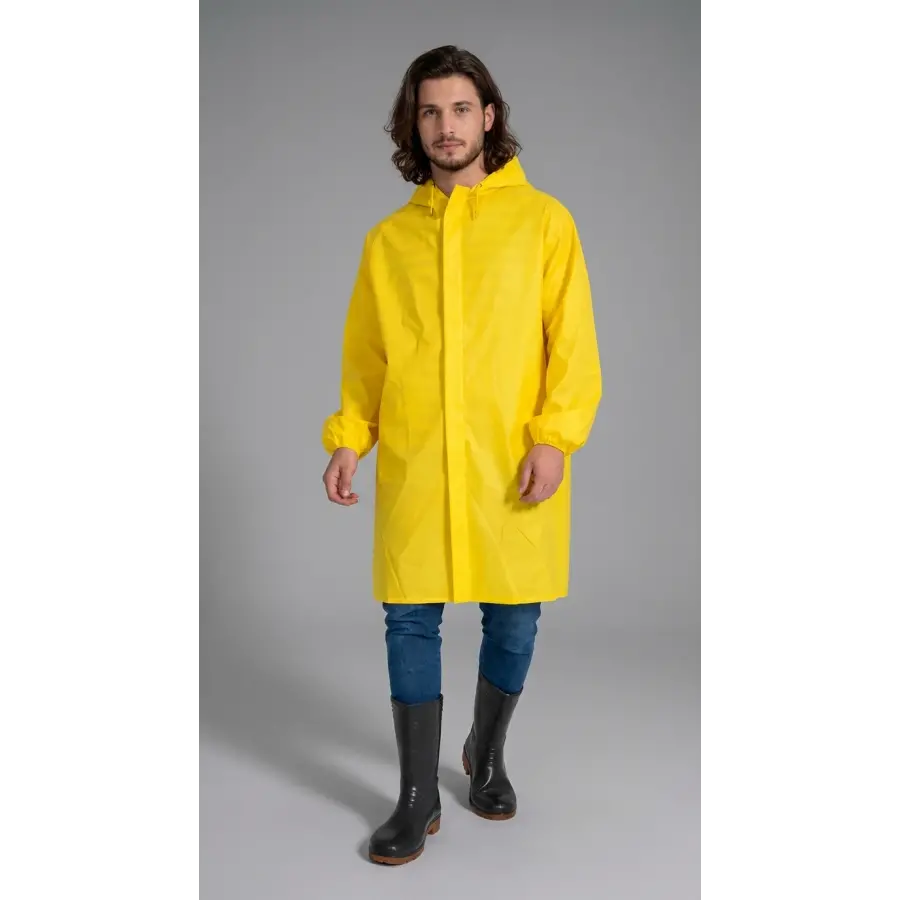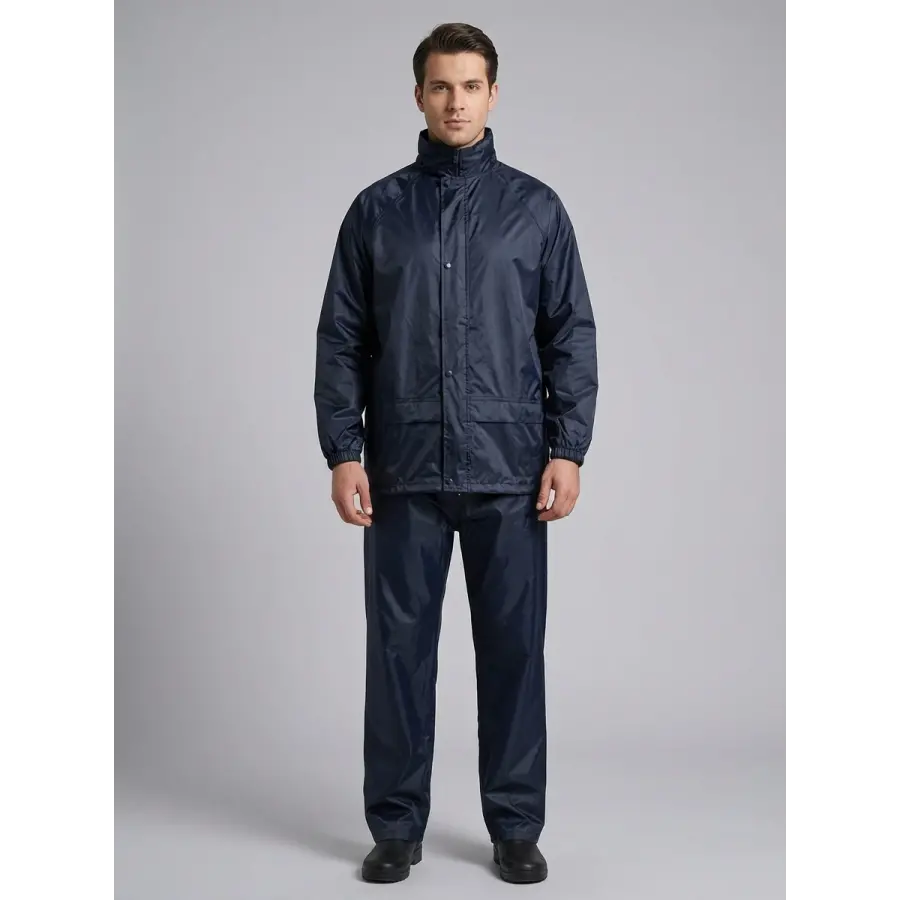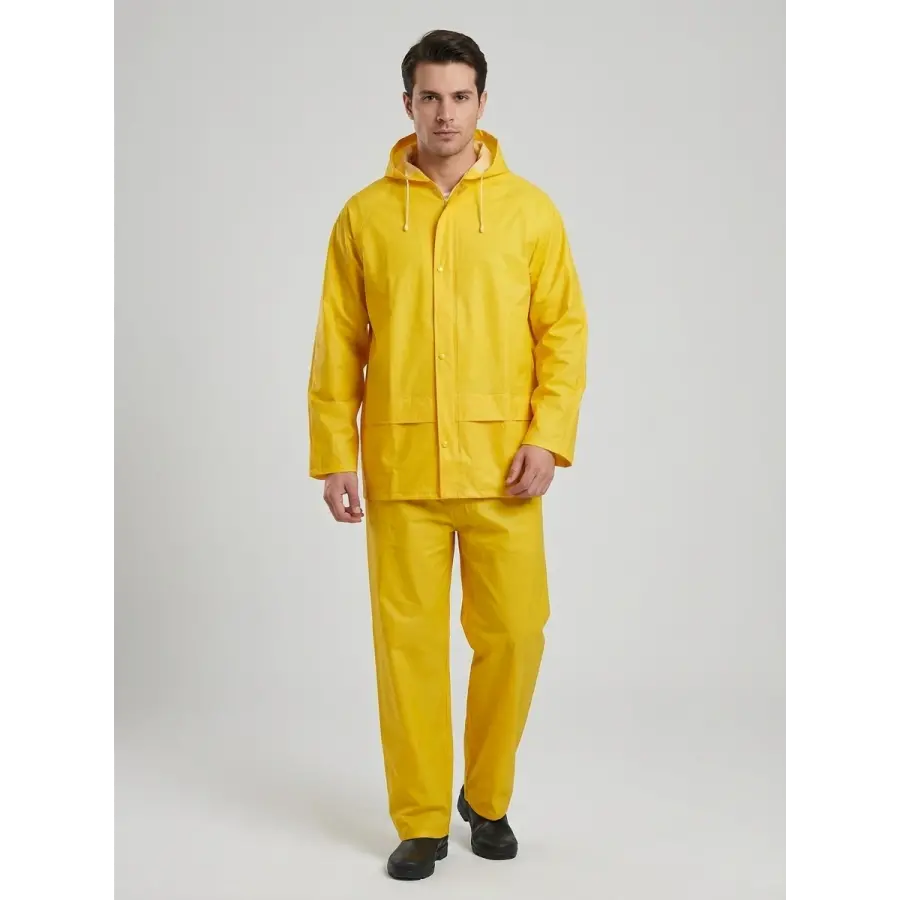





When buying a suit for working in the rain, it is not enough for the jacket alone to look good. What matters is how the jacket and trousers fit together, whether the hood restricts your vision, and which features are actually stated in the product description. Two rain jackets that look alike in photos can perform quite differently in use.
Short answer: When buying work rainwear, check the information given on water protection, the seams and closures, the fit with the clothes you will wear underneath, and the care instructions. Do not treat “water-repellent”, “water-resistant” and “waterproof” as meaning the same thing. Do not infer a test value or protective feature from the product name if it is not stated.
Short walks from a vehicle to a building and hours of outdoor work are not the same need. Start by describing your daily use: how long are you out in the rain, are you constantly on the move, and is there somewhere to dry a wet suit during the day? Let your answers to these questions shape your shopping list.
For occasional site visits, for example, you might prioritise portability and how quickly the suit goes on and comes off. If you spend most of the day outdoors, the product’s intended use and the stated performance information become more decisive. Do not choose a model that gives no information about your working conditions just because it is cheap.
Water beading on the surface is not, on its own, proof that water will not get through the garment as a whole. Seams and joins play as big a role in water protection as the fabric or membrane. That is why seams and closures matter. Helly Hansen’s guide to how waterproof clothing works explains seam sealing as part of this construction.
If the product page lists a test value, standard or usage limit, read it. If it does not, do not conclude that the garment “will never let water in”. The information you need is the conditions the product is offered for. Do not assume that the details of one model on the site apply to another rain jacket.
| Comparison point | What to check on the product page |
|---|---|
| Water protection | Read the test, seam and closure information given alongside the title. |
| Suit contents | Confirm that the jacket and trousers are sold together. |
| Size | Assess the measurements of both pieces with the clothes you will wear underneath. |
| Everyday use | Check the hood, cuffs, trouser hems and carrying details. |
Compare rain suits and long rain jackets →
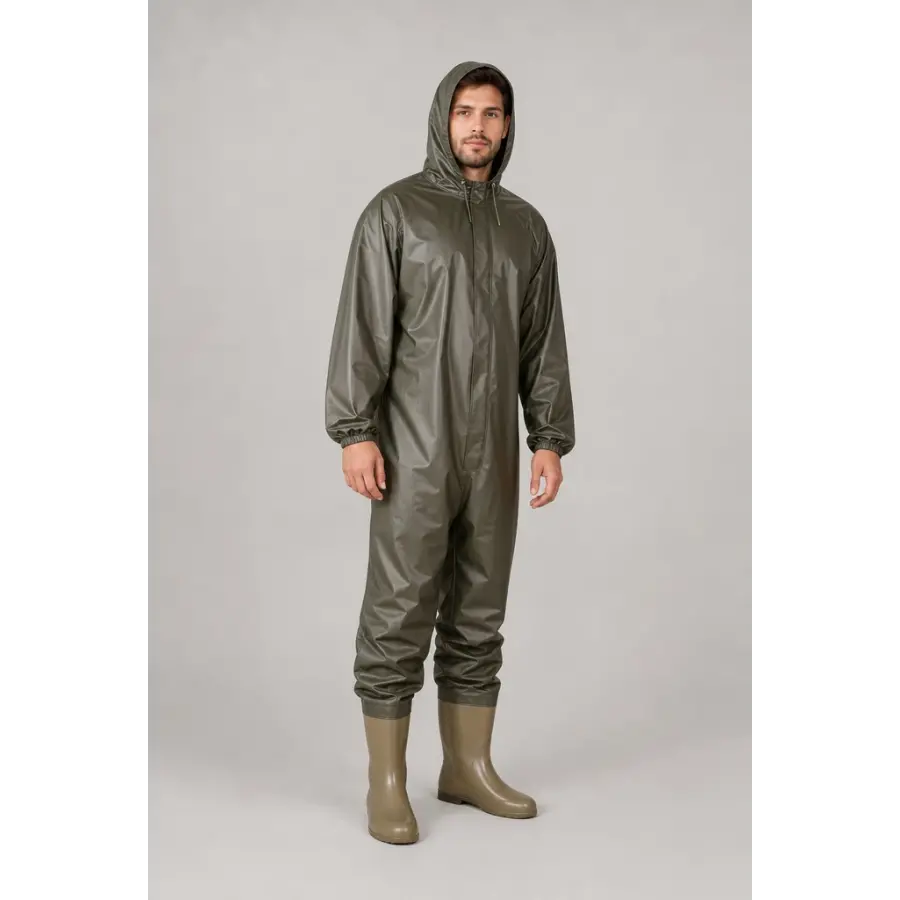
Check that the pack really contains both a jacket and trousers. With some products, the photo shows a full outfit while only a single piece is for sale. The title, pack contents and options should all match.
If one piece feels comfortable and the other tight, the suit cannot be said to suit you. That is why it helps to find out the measurements of both pieces before ordering.

Review the suit’s product description, available sizes and photos. Ask about any features not stated for your working conditions before you order.
View product details →Will you wear the rain suit over a thin T-shirt, or over a jacket or fleece? Assess the size accordingly. But do not automatically turn this into a rule of “buy two sizes up”. The manufacturer’s cut may already be designed for wearing as an outer layer.
When trying it on, reach your arms forward, sit down and walk with short steps. With the zip closed, check for pulling across the chest and shoulders, tension in the crotch of the trousers, or hems dragging on the ground. If there is no size chart, ask for the garment measurements rather than guessing from height and weight.
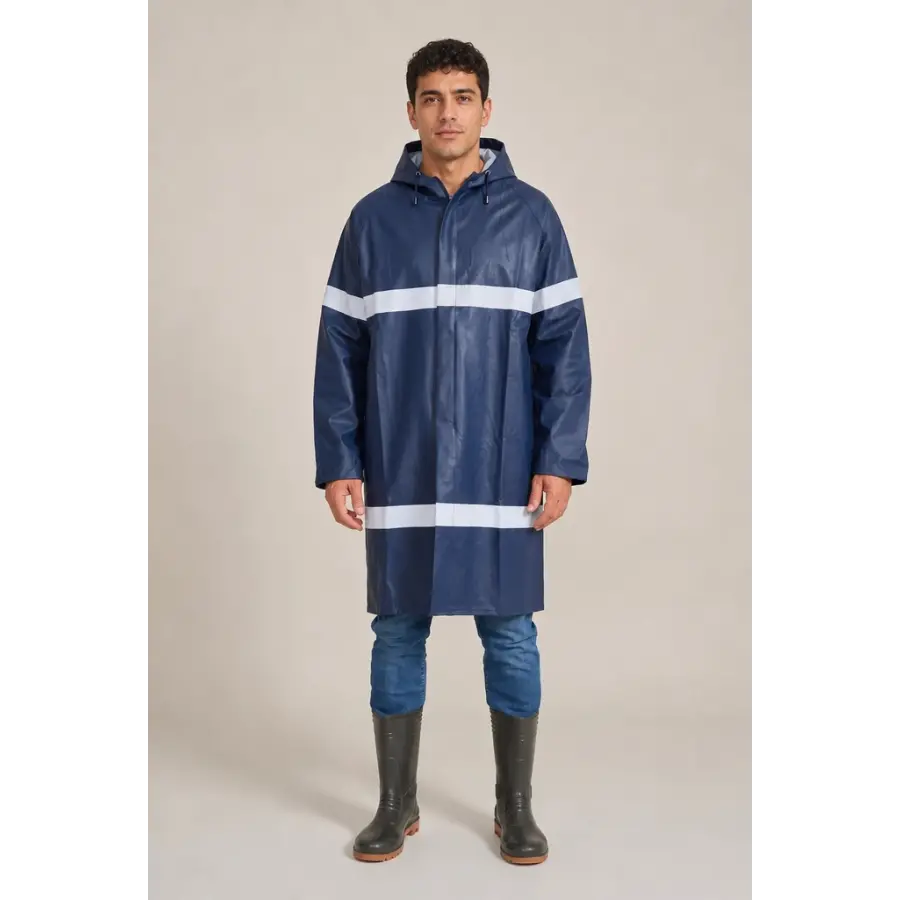
It is important that the hood moves with your head and does not make it harder to see around you. Look for details such as drawcords, press studs and cuffs in the product photos; if you cannot see them, do not assume they are there. If you will wear it with a safety helmet, confirm separately that the product is suitable for this.
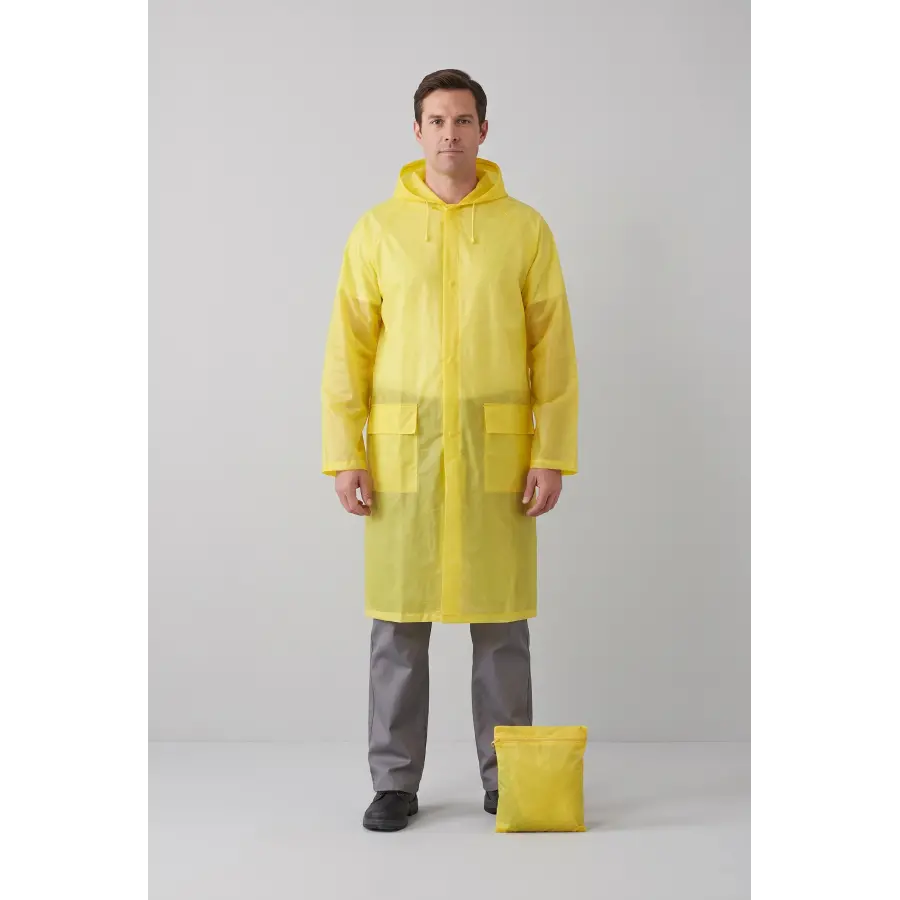
Buying a rain jacket with pockets does not guarantee that a phone in the pocket will stay dry. Read the information given about pocket flaps or zips. Do not try to meet your need to protect electronics based only on the number of pockets.
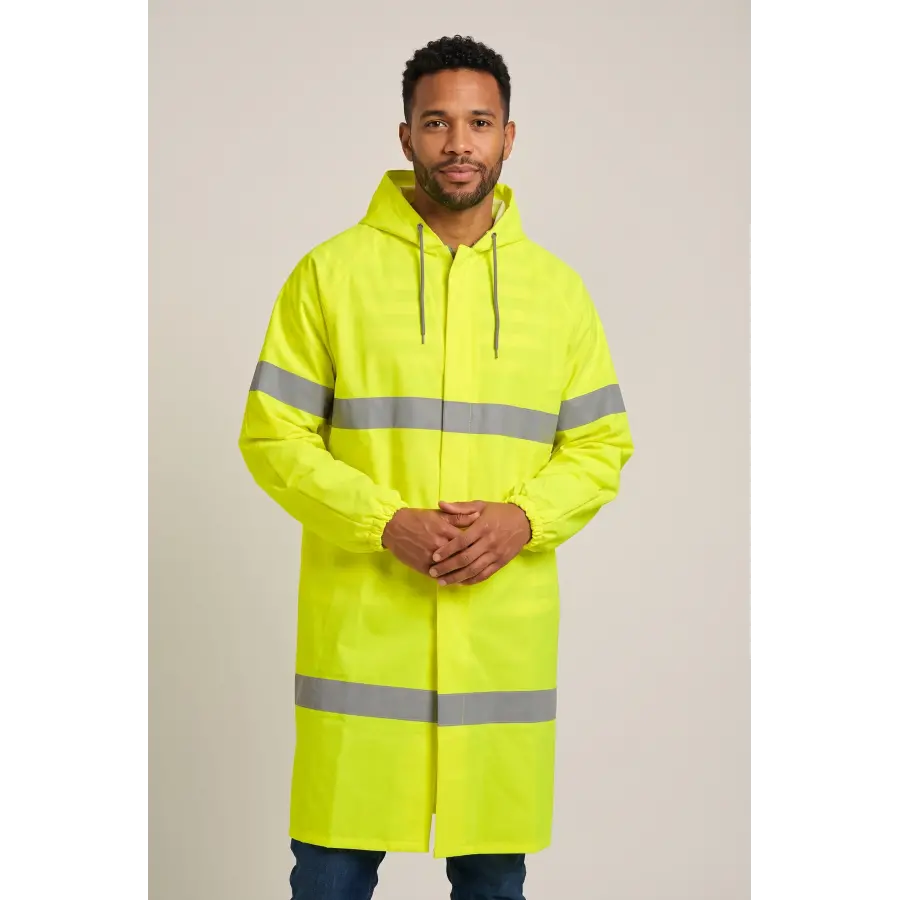
A bright yellow or orange colour does not, on its own, mean documented hi-vis performance. Likewise, do not assume that a suit offered for rain protects against chemical splashes, electrical or flame hazards. If your workplace specifies protective properties, check the relevant product documentation.
This distinction separates two different questions when shopping: “Which features are stated for rain?” and “What other requirements does my work have?” The answer to the second question cannot be found from the product colour or a promotional photo alone.
Review the product information for the yellow rain suit → Assess your colour choice separately from the documented protective properties your workplace requires.
Follow the product label for washing temperature, detergent, drying and ironing. Do not apply the same care method to every rain suit. When checking the suit after use, look for visible damage to the seams, closures and surface, and assess any problem you notice in line with the product's care instructions.
Before ordering, also think about where the suit will be stored at the workplace. If you go home in wet clothing at the end of the day, planning a separate way to carry and dry it can make daily use easier.
Do not assume so. Assess rain protection and thermal insulation separately; read the information on the lining and the intended season of use.
This is not a rule that applies to every product. Consider the product's measurements and fit together with the layers you wear underneath.
The title is only a starting point. It should be assessed together with the detailed description, seam construction, any test information and the intended use.
Compare the pack and size information of the models available in the work rainwear category. For other outerwear options, see our work coats and winter work jackets. If the information you need is not in the product description, ask us, quoting the product code.


We use strictly necessary cookies to run this website. With your explicit consent we also use analytics and marketing cookies; in this context some data may be transferred to service providers outside Türkiye. You can change your choice at any time. Details: Cookie Policy