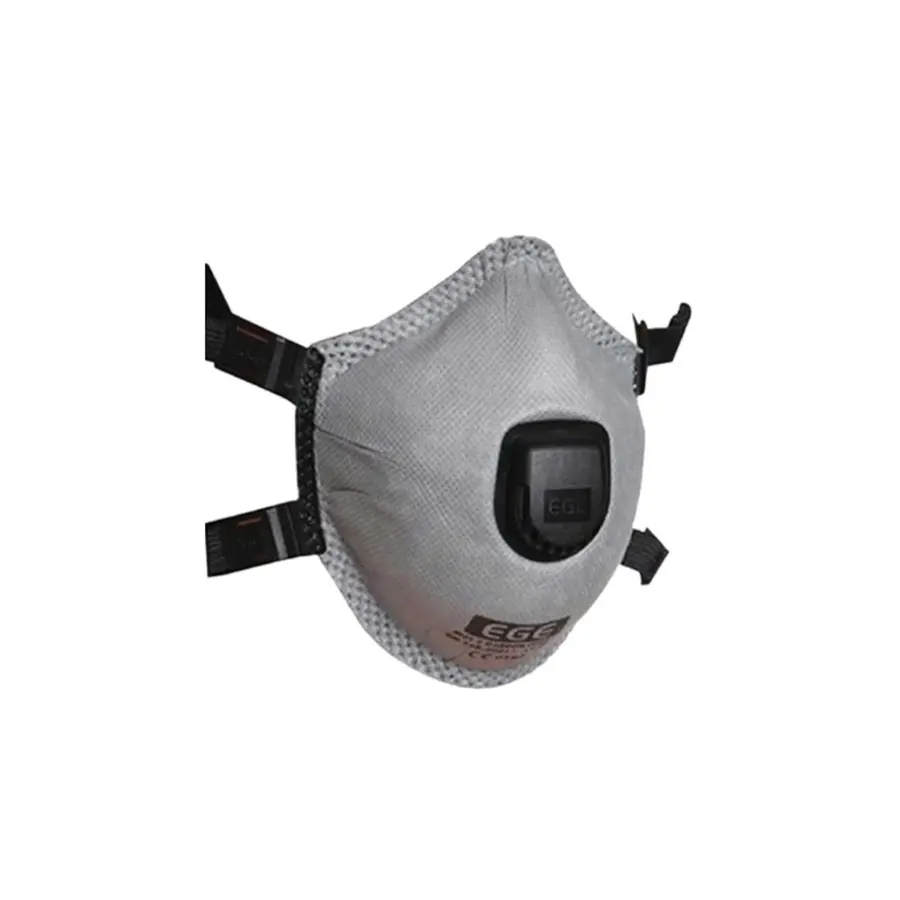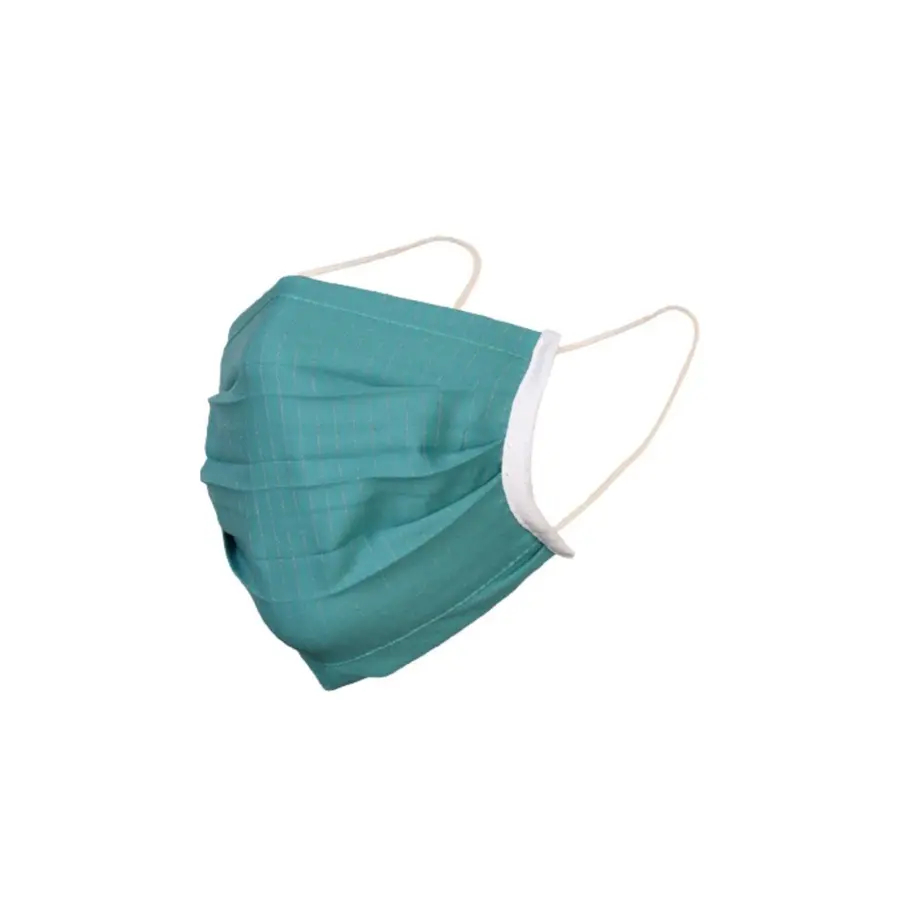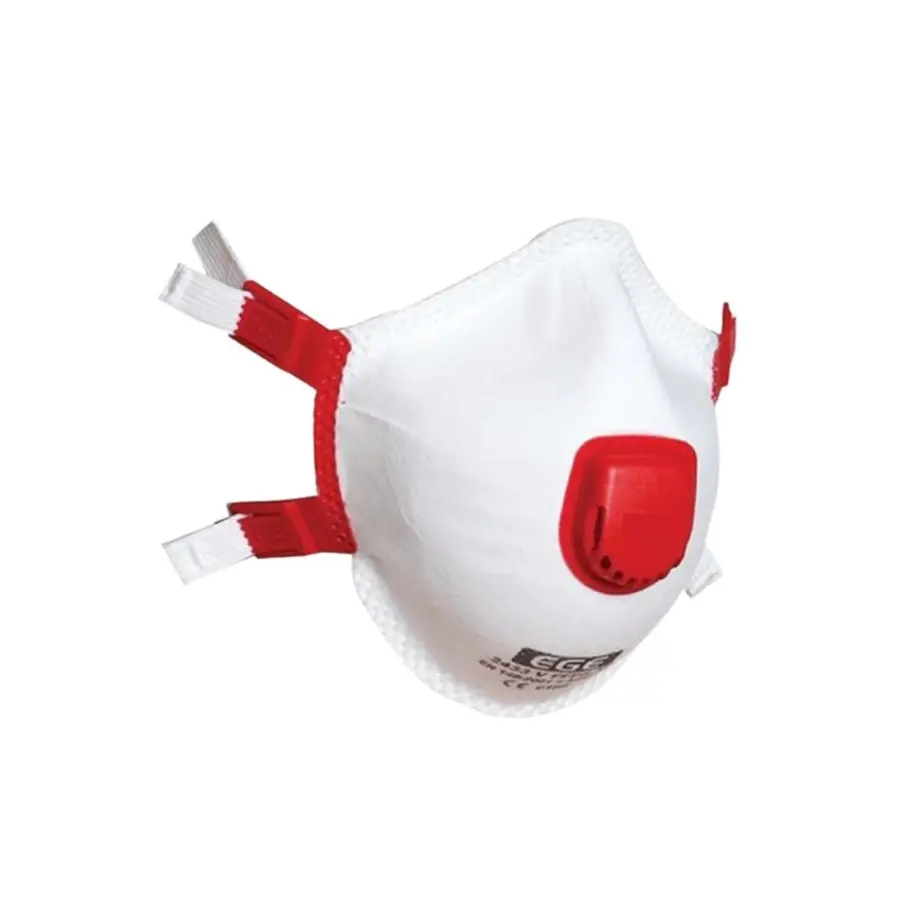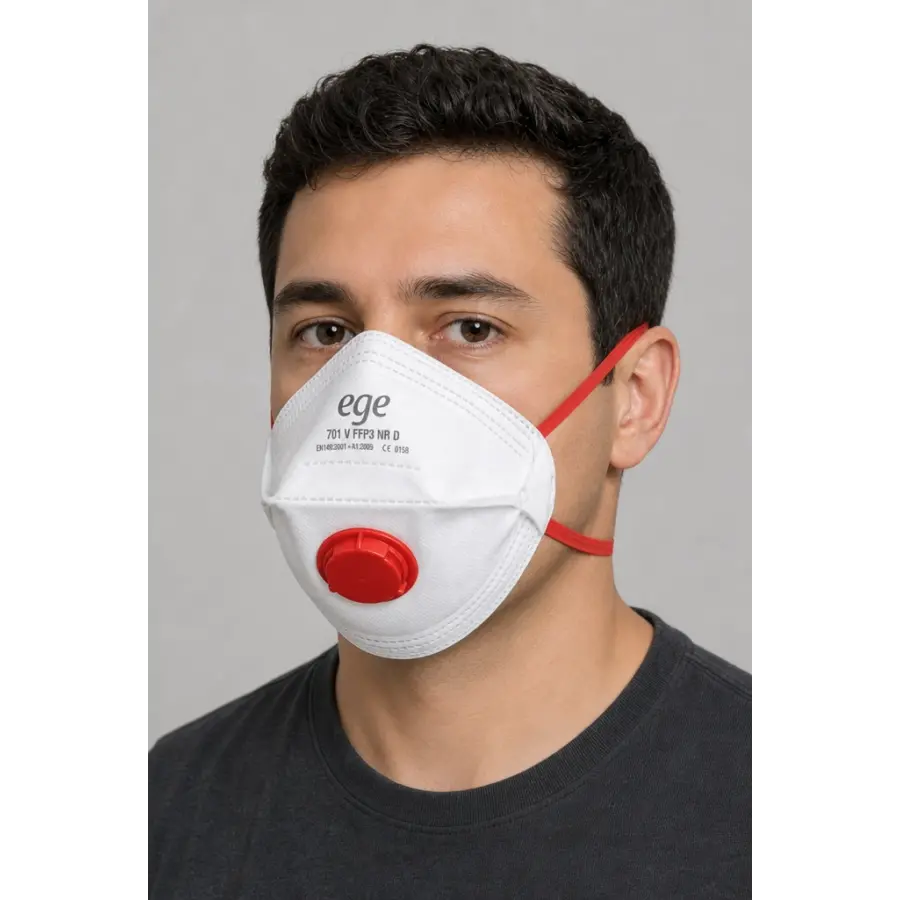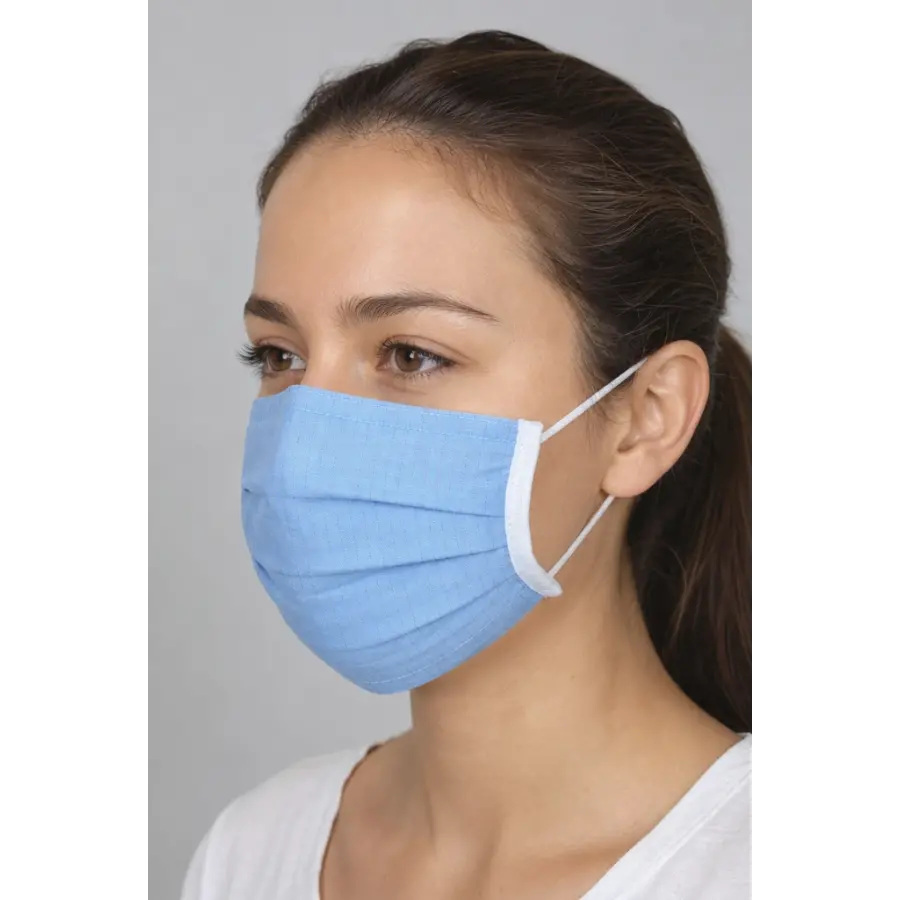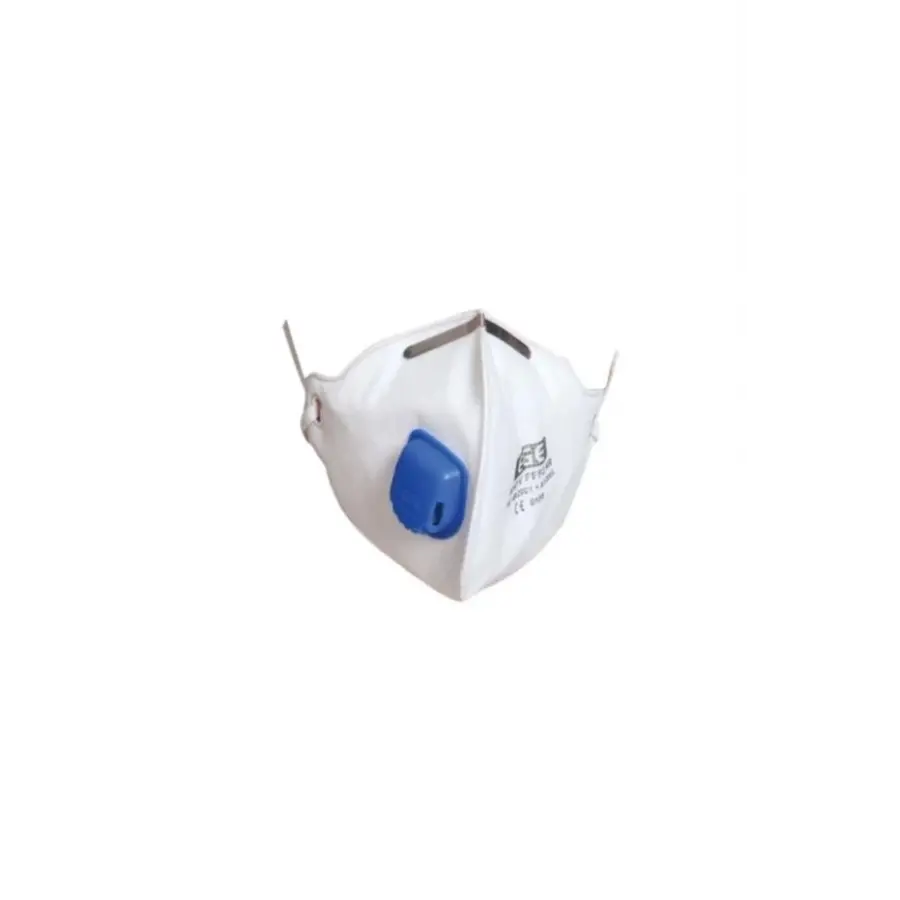





FFP is the protection class of filtering half masks under EN 149. The minimum filtration efficiencies stated by manufacturers are FFP1 80%, FFP2 94%, FFP3 99%. The HSE's assigned protection factor is 4 for FFP1, 10 for FFP2 and 20 for FFP3. A mask marked NR is used for a single shift (maximum 8 hours) and then discarded; R means it is reusable. D indicates that it has passed the dolomite clogging test. An exhalation valve is purely a comfort feature that makes breathing out easier; it protects the wearer but not the people around them.
| Class | Minimum filtration | Total inward leakage (Moldex: maximum) | HSE assigned protection factor |
|---|---|---|---|
| FFP1 | 80% | 22% | 4 |
| FFP2 | 94% | 8% | 10 |
| FFP3 | 99% | 2% | 20 |
The assigned protection factor is a practical value showing how many times the mask reduces the concentration in the surrounding air. According to Moldex, FFP1 masks are used against non-harmful dusts at concentrations up to 4 times the workplace exposure limit, and FFP3 masks at up to 20 times. These values depend on the mask fitting the face properly (see below).
In Europe, FFP masks are certified to EN 149:2001+A1:2009 and Regulation (EU) 2016/425 on PPE. As Moldex warns: "KN95 and N95 are not approved protection levels in Europe."
| Marking | Meaning |
|---|---|
| NR | Non-reusable: one shift at most. HSE: discard after a single shift (8 hours). |
| R | Reusable. Service life depends on the concentration and breathing resistance; replace when breathing becomes difficult. |
| D | Has passed the dolomite dust clogging test. |
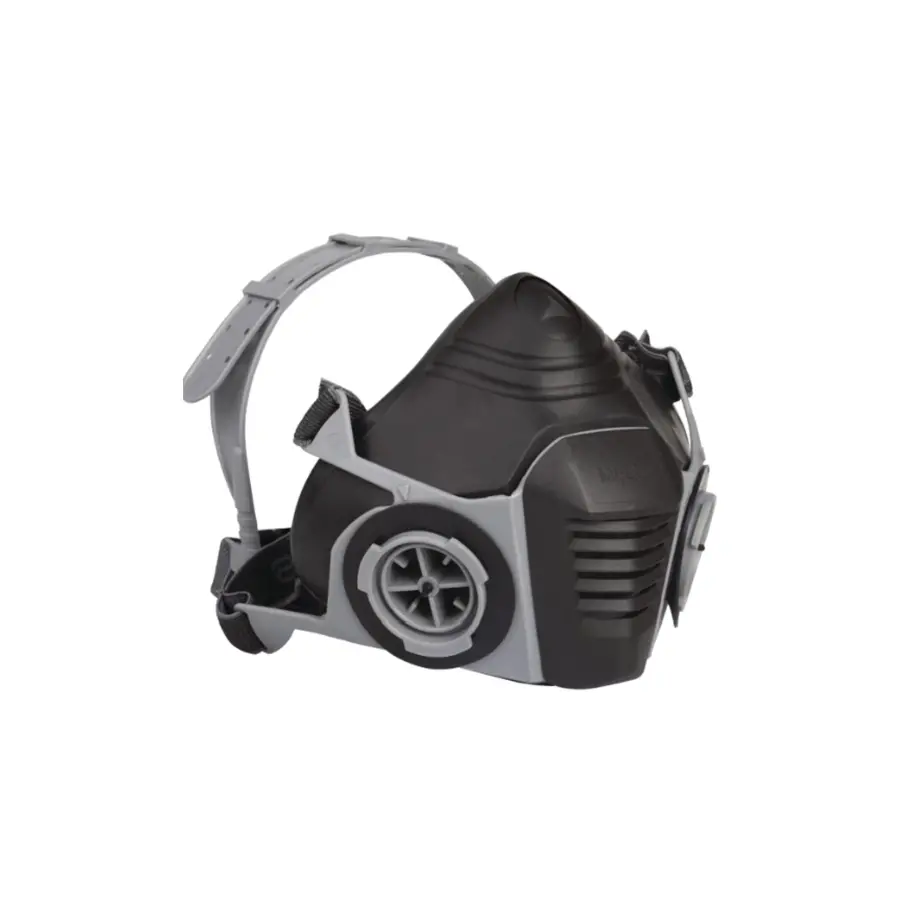
Replaceable P1, P2 and P3 filters used with half masks and full-face masks are a different classification; do not confuse them with FFP classes.
Sources talk in terms of shifts, not "days". A disposable mask marked NR is discarded at the end of one shift (maximum 8 hours). A mask marked R can be used beyond one shift, but must be replaced if breathing resistance increases excessively. According to Moldex, when used against biological agents, the maximum duration is one shift. Replace a mask that is wet, damaged or no longer fits the face, regardless of how long it has been used.
Annex 3 of the PPE Regulation in Türkiye lists, as examples of work where respiratory protection may be required, "work generating dust at levels that may pose a health and safety risk", "spray painting where dust control is inadequate" and work in confined spaces. The correct class is selected through a risk assessment based on the type of dust and its concentration in the workplace. For all PPE:
PPE selection matrix.It is the lowest protection class under EN 149: minimum 80% filtration and, according to the HSE, an assigned protection factor of 4.
"Non-reusable": the mask is used for no more than one shift.
FFP3 offers higher filtration (99% vs 94%) and lower total inward leakage; the HSE assigned protection factor is 20 for FFP3 and 10 for FFP2.
A valve improves comfort but does not protect people nearby. If exhaled air also needs to be filtered, choose an unvalved mask.
Products:
Ege 4013 V FFP2 valved · Ege 701 V FFP3 valved · Ege 2433 V FFP3 · Delta Plus M6200 half mask · All respiratory protectionSources:HSE HSG53 (2013) · Moldex FFP brochure (2020) · uvex and JSP respiratory protection information pages · PPE Regulation in Türkiye and its annexes (mevzuat.gov.tr)
This guide was prepared by Vitrin Online on 10.10.2026. It provides general information only and does not constitute legal advice. Always follow the product's user instructions and your workplace risk assessment.


We use strictly necessary cookies to run this website. With your explicit consent we also use analytics and marketing cookies; in this context some data may be transferred to service providers outside Türkiye. You can change your choice at any time. Details: Cookie Policy