

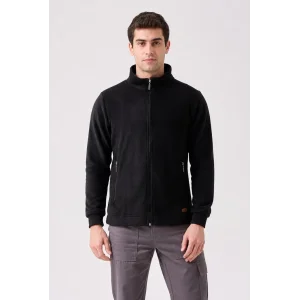



A good technical specification defines measurable performance, not a brand. For safety shoes, state EN ISO 20345:2022 and the protection class (such as S1P or S3),additional markings and the size breakdown; for workwear, state fibre composition, fabric weight, colour fastness, dimensional change and seam strength with test methods; for all PPE, require the CE marking, user instructions in the language of the country of use and the EU declaration of conformity, and for Category II and III products also the EU type-examination certificate. Below are sample clauses you can copy and adapt.
This guide is for purchasing departments, health and safety specialists and organisations preparing direct purchases or tenders. The sample clauses are a general starting point; adapt the values to your workplace risk assessment and your organisation’s purchasing rules.
| Section | What to include |
|---|---|
| 1. Subject and scope | Product name, the work and environment it is for, number of users |
| 2. Quantity and size breakdown | Total quantity, breakdown table by shoe size or garment size |
| 3. Standards and performance | Standard to be met and its edition year, protection class, additional requirements |
| 4. Materials and construction | Upper or fabric, sole, trims, colour, logo and embroidery |
| 5. Marking and documents | Markings on the product, user instructions, conformity documents |
| 6. Samples and acceptance | Number of samples, acceptance inspection, testing in case of dispute and who pays for it |
| 7. Packing, delivery and warranty | Packing and labelling, place and time of delivery, warranty period |
Fill in the values in square brackets to suit your needs. For the meaning of classes and additional markings, see our
how to read a safety shoe label guide, and for choosing between S1P and S3, our S1P vs S3 guide.First decide whether the product is PPE. Garments that claim protection against a risk such as low visibility, flames, welding, chemicals or cold are PPE and must carry the relevant standard and the CE marking. For ordinary workwear with no protective claim (trousers, jackets, coveralls, aprons),you define quality criteria and test methods instead. The values below are commonly used examples; set them according to your own requirements.
| Property | Test method | Example value |
|---|---|---|
| Fibre composition | EN ISO 1833 series | [65% polyester, 35% cotton], tolerance ±3 points |
| Fabric weight (g/m²) | EN 12127 | [summer 200–240, winter 260–320] g/m², tolerance ±5% |
| Colour fastness to washing | EN ISO 105-C06 | Colour change and staining at least 4 |
| Colour fastness to rubbing | EN ISO 105-X12 | Dry at least 4, wet at least 3 |
| Colour fastness to perspiration | EN ISO 105-E04 | At least 4 |
| Dimensional change after washing | EN ISO 5077 (washing to EN ISO 6330) | Max. ±3% in warp and weft |
| Tensile strength | EN ISO 13934-1 | [At least X N in warp and weft] |
| Tear strength | EN ISO 13937-2 | [At least X N in warp and weft] |
| Seam strength | EN ISO 13935-2 | [At least X N] |
| Seam slippage | EN ISO 13936-1 (or -2) | [Max. X mm at the specified load] |
| Pilling | EN ISO 12945-2 | At least 3–4 |
For winter workwear, also define the lining and padding material, padding weight and, if needed, wind and rain protection. If protection in cold environments is required, add PPE standards such as EN 342. For details see our
winter workwear guide.PPE is divided into three categories according to the level of risk. In Category I the manufacturer assesses conformity itself. In Categories II and III an EU type-examination by a notified body is mandatory; in Category III production is also monitored by a notified body, and the four-digit number of the body that carries out this production control appears next to the CE marking; this may be a different body from the one that issued the certificate. Most safety footwear is Category II; electrically insulating footwear (EN 50321-1) and footwear for chainsaw users (EN ISO 17249) are Category III. If you import into a non-EU market, the local scheme also applies, for example EAC under TR CU 019/2011 in the EAEU or SABER in Saudi Arabia.
| Product | Core standard to specify | Category |
|---|---|---|
| Safety footwear | EN ISO 20345:2022 and class (S1P, S3, etc.) | II |
| Electrically insulating shoes and boots | EN 50321-1 and class | III |
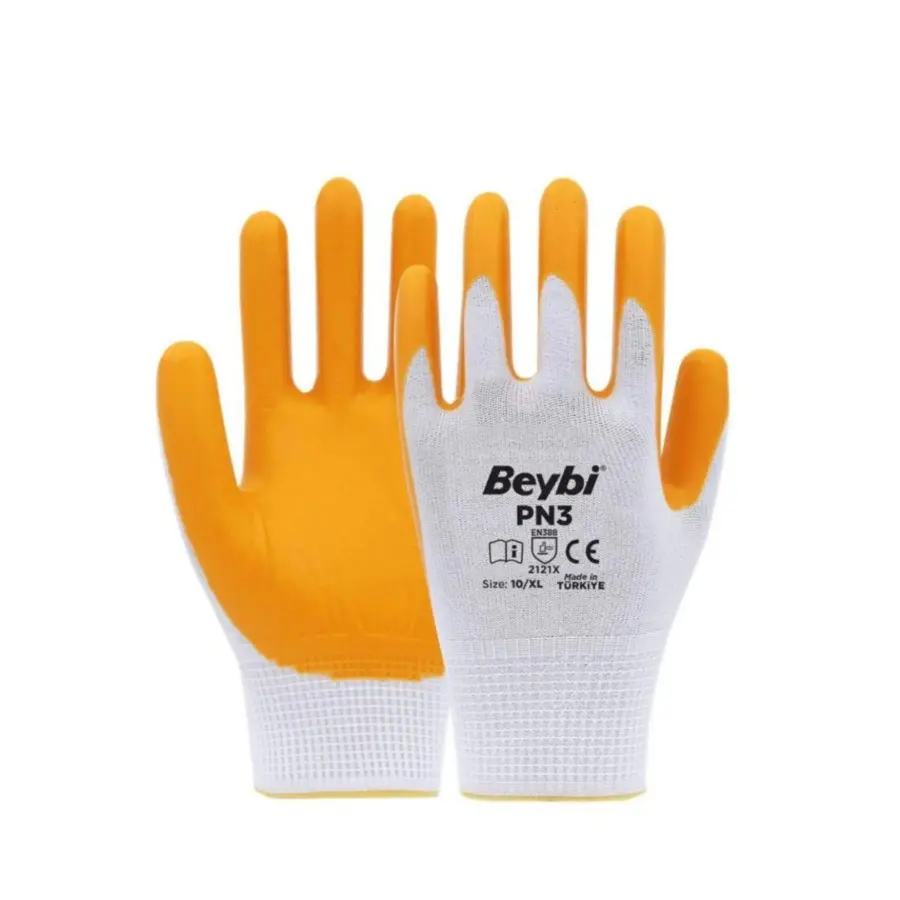
| Gloves against mechanical risks | EN ISO 21420 and EN 388 (performance code) | II |
| Gloves against chemicals | EN ISO 21420 and EN ISO 374-1 | III |
| Electrical insulating gloves | EN 60903 and class | III |
| Safety helmet | EN 397 | II |
| Safety glasses | EN 166 or EN ISO 16321-1 | II |
| Dust mask | EN 149 and class (FFP1, FFP2, FFP3) | III |
| Hearing protection | EN 352 series and SNR value | III |
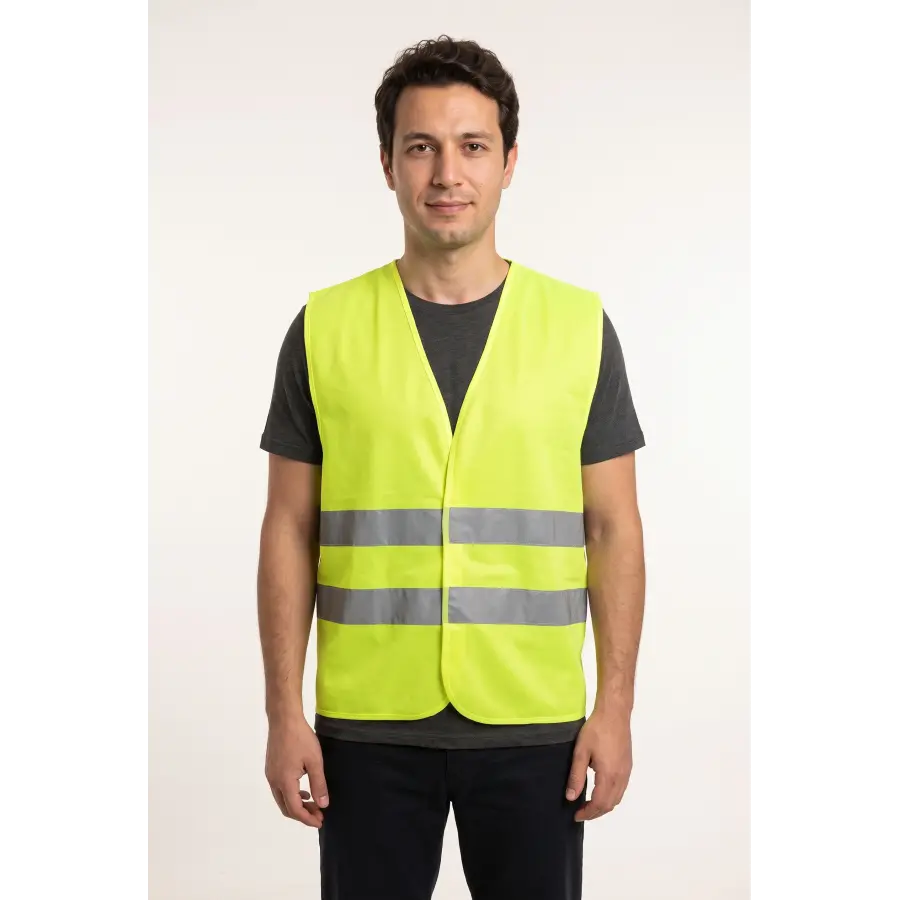
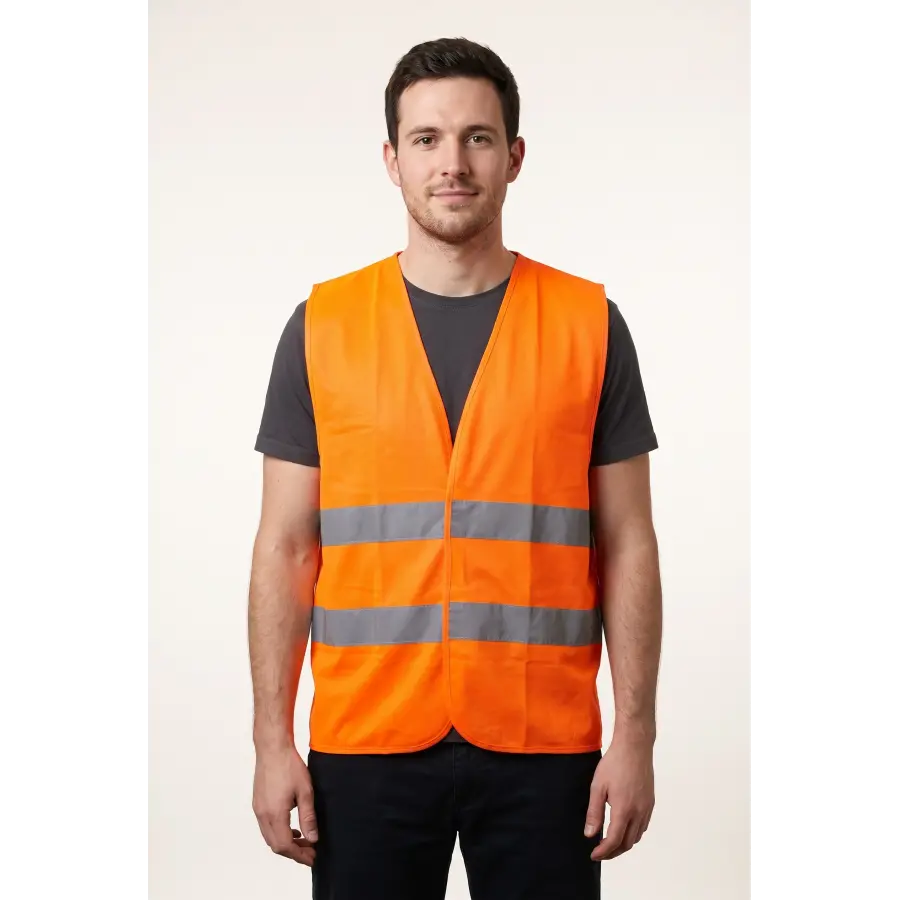
| Hi-vis vest | EN ISO 20471 and class | II |
| Full-body harness | EN 361 (lanyards EN 354, energy-absorbing lanyards EN 355) | III |
Always state the current edition of each standard with its year. For product-specific details, see our guides:
EN 388 glove codes, FFP1 vs FFP2 vs FFP3, hearing protection SNR and hi-vis vest classes.Send us your specification or list of requirements, and we will prepare a quotation with suitable models, protection classes and prices based on your size breakdown. We share the product documents that can be obtained from the manufacturer with the quotation.
You can reach us via our bulk and corporate orders page or at [email protected]. For employers’ duty to provide PPE in Türkiye, see our do employers have to provide safety shoes guide.Subject and scope, quantity and size breakdown, the standards and protection classes to be met, materials and construction, marking and document requirements, samples and acceptance inspection, and packing, delivery and warranty terms. Every clause should be measurable and verifiable.
For safety footwear, state EN ISO 20345:2022 and the required protection class (for example S1P or S3). Add requirements such as SR for slip resistance, WR for water resistance or ESD (EN 61340-5-1) for electronics production according to the workplace risk assessment.
In public tenders this is generally not allowed: EU Directive 2014/24/EU (Article 42) and, in Türkiye, Law No. 4734 (Article 12) permit a reference to a make or model only exceptionally, where the product cannot be described precisely enough, and then with the words “or equivalent”. Private companies are not bound by this, but specifying performance can bring more and better offers.
Garments that claim protection are PPE: for example EN ISO 13688 for general requirements, EN ISO 20471 for high visibility, EN ISO 11611 for welding, EN ISO 11612 for heat and flame and EN 1149-5 for antistatic clothing. For ordinary workwear with no protective claim, you specify quality criteria and test methods such as fibre composition, fabric weight, colour fastness, dimensional change and seam strength.
The CE marking and user instructions on or with the product, the EU declaration of conformity and, for Category II and III products, the EU type-examination certificate issued by a notified body. There is no single “CE certificate”; CE is a marking.
The shoe should be marked with CE, the EN ISO 20345 standard number and the class. Ask the seller for the EU declaration of conformity and the EU type-examination certificate issued by a notified body; match the model code on the certificate with the product, check the body’s number in the NANDO database and look at the expiry date. Because most safety footwear is Category II, it is normal for there to be no four-digit number next to the CE marking; Category III products such as electrically insulating footwear do carry this number.
For summer you specify lighter, breathable fabrics and blends with a higher cotton content; for winter, a heavier fabric weight, lining and padding and additional wind and rain protection. If protection against cold is claimed, add PPE standards such as EN 342 (protective clothing against cold).
It is not mandatory, but it is the most reliable way to see quality and fit before delivery. State the number of samples, the evaluation criteria and that the approved sample will be the reference for delivery.
Sources:Directive 2014/24/EU on public procurement, Article 42 (EUR-Lex) · Turkish PPE Regulation, Official Gazette No. 30761 (aligned with Regulation (EU) 2016/425) · Council Directive 89/656/EEC on the use of PPE at work (EUR-Lex) · Regulation (EU) 2016/425 on PPE (EUR-Lex) · EU database of notified bodies (NANDO)
This guide was prepared by Vitrin Online on 26.10.2026. It provides general information and is not legal advice. Adapt the example values to your workplace risk assessment and the purchasing rules that apply to your organisation.


We use strictly necessary cookies to run this website. With your explicit consent we also use analytics and marketing cookies; in this context some data may be transferred to service providers outside Türkiye. You can change your choice at any time. Details: Cookie Policy